
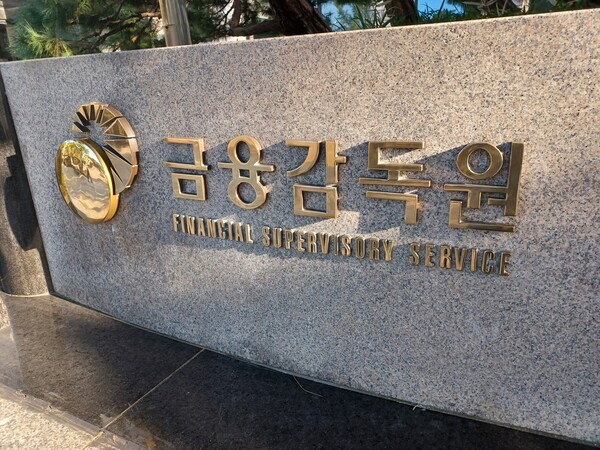
[DigitalToday reporter Lee Ji-young (이지영)] The Financial Supervisory Service will extend guidelines for the margin exchange system for non-cleared over-the-counter derivatives transactions. From September, firms subject to initial margin requirements will increase to 143 and those subject to variation margin requirements will rise to 165.
The Financial Supervisory Service said on Aug. 20 that the "Guidelines on the Margin Exchange System for Non-Cleared OTC Derivatives Transactions" will be extended for one year from September.
The margin exchange system requires counterparties in OTC derivatives transactions that are not cleared through a central counterparty (CCP) to exchange collateral in advance. It has been in effect since March 2017 to manage systemic risks that may arise in OTC derivatives trading.
The rules apply to financial companies whose average notional amount of non-cleared OTC derivatives at the end of March, April and May each year exceeds a certain threshold. For companies belonging to a financial group, applicability is determined by aggregating the notional amounts of non-cleared OTC derivatives of the group's financial companies.
The number of firms subject to initial margin requirements will increase by 5 to 143 from 138 from September. Seven firms will be newly included: Bank of China, Yuanta Securities, Hyundai Investment & Asset Management, Tongyang Life Insurance, ABL Life Insurance, Hyundai Marine & Fire Insurance and SBI Savings Bank. Two firms, UBS Bank and Carrot General Insurance, will be excluded.
The number of firms subject to variation margin requirements will also rise by 2 to 165 from 163. Four firms will be newly covered: China Everbright Bank, ABL Life Insurance, Swiss Re Asia Pte Ltd Korea Branch and SBI Savings Bank. UBS Bank and Carrot General Insurance will be excluded.
The FSS said it will continue to check implementation of margin exchanges for non-cleared OTC derivatives transactions in view of the possibility of increased volatility in global financial markets. It also plans to gather any difficulties that arise as financial companies implement the system.
 Lee Ji-young
ljy@d-today.co.kr
Lee Ji-young
ljy@d-today.co.kr