
[DigitalToday intern reporter Seung-a Yoo (유승아)] OpenAI has introduced a new safety framework that monitors artificial intelligence (AI) misuse without storing corporate customers' data.
On Aug. 19 (local time), IT media outlet TechCrunch reported that OpenAI has previewed "Private Safety Processing" to some customers and is testing a way to detect potential misuse without storing customer data.
The core of the feature is to bundle multiple chat sessions into one to capture risk signals. The existing Zero Data Retention (ZDR) policy had OpenAI API internal agents monitor misuse on a session-by-session basis. Customer data was not stored under that approach either, but the monitoring scope remained within a single session.
OpenAI explained that the new technology expands the monitoring scope of Zero Data Retention. The company defined it as a form of "long-range safety monitoring" and said it looks at inputs and outputs across multiple sessions, not a single conversation, to find signs of misuse. It added that if an agent detects certain patterns, it analyzes interactions across sessions, but there is no direct human review of user conversations.
OpenAI said the approach helps catch malicious use that unfolds across multiple sessions. For example, an actor trying to design malware for cyberattacks could spread requests across several sessions to avoid detection, and Private Safety Processing can analyze such multiple conversations to find misuse signals, it said.
When the system operates, OpenAI receives only narrowly defined signals warning of specific types of activity. The company then decides, based on the signals, whether sanctions are needed. If it judges sanctions are necessary, OpenAI said it may request additional context from the customer or work together to resolve the issue, and the customer can choose to share its data at its discretion.
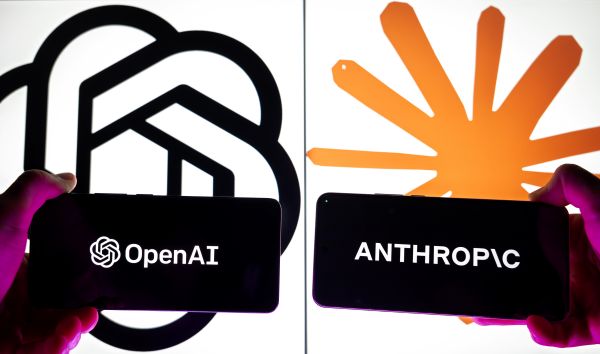
The announcement contrasts with a data retention policy recently introduced by Anthropic. In a policy announced in July, Anthropic said it can retain user sessions and chat content for 30 days for models covered by the policy. The covered set includes all Mythos-class models and future models with similar capabilities. The company said the policy is meant to examine potentially inappropriate behavior for safety purposes, but concerns have grown among some companies that handle large amounts of sensitive data.
Anthropic generally follows a zero data retention principle, but covered models such as Fable are an exception. The company acknowledged that human review of customer data may occur, but said only a small number of approved reviewers conduct it through controlled access pathways. It said each review session is recorded in tamper-evident logs that reviewers cannot arbitrarily suppress or modify.
OpenAI's move is seen as an attempt to find a balance between safety and corporate privacy. As AI models improve, the risk of misuse has increased, and corporate customers are strongly demanding data control as well as safety measures. In this situation, OpenAI is targeting enterprise demand by emphasizing that it can track patterns across sessions without direct human viewing.
The increasingly intense competitive dynamic between the two companies is also cited as a backdrop to the announcement. A recently released report said OpenAI's second-quarter growth was slower than Anthropic's. Anthropic's annualized revenue is said to be about $65 billion, and investors have been discussing the possibility of an initial public offering (IPO) valued at $2 trillion. As OpenAI is also preparing for an IPO, competition over security and privacy policies aimed at enterprise customers could expand further.
 Seung-a Yoo
ysah@d-today.co.kr
Seung-a Yoo
ysah@d-today.co.kr