
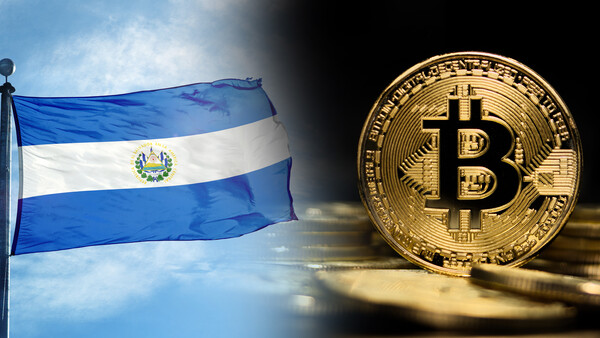
Five years after El Salvador adopted bitcoin as legal tender, the effects initially expected in financial inclusion and lower overseas remittance costs appear limited. Still, assessments say it retained symbolic significance by showing in policy that a country can adopt bitcoin as an official currency.
Cointelegraph, a blockchain media outlet, reported on Aug. 12 that President Nayib Bukele announced in June 2021 the adoption of bitcoin as legal tender, saying it would improve access for people excluded from financial services and reduce remittance costs. A 2025 study, however, found bitcoin users were concentrated among young men, urban residents, highly educated groups and existing bank users.
The World Bank said that at the time only 35.9 percent of El Salvador’s population aged 15 and older had an account at a financial institution. The government-launched Chivo bitcoin wallet also failed to fundamentally improve financial access for non-bank users.
Bitcoin use in remittances also fell short of expectations. Remittances account for about 24 percent of gross domestic product, but the share sent through cryptocurrency wallets rose to 1.7 percent in 2020 and 2021 before falling to below 1 percent in 2024. El Salvador already uses the U.S. dollar as an official currency, limiting any cost-saving effect from exchanging through bitcoin.
Initial subsidies also did not translate into sustained use. The government gave Chivo wallet sign-ups bitcoin worth $30, but a U.S. National Bureau of Economic Research survey found more than 60 percent of initial users made no additional transactions after using the bitcoin they received. Actual use for payments at local stores was also low.
The policy ultimately retreated. El Salvador agreed to $1.4 billion in financial support with the International Monetary Fund at the end of 2024 and scaled back state intervention related to bitcoin. In January 2025 it amended its bitcoin law to make merchants’ acceptance of bitcoin voluntary and allow taxes to be paid only in dollars. The IMF later assessed that there was insufficient evidence bitcoin provided tangible benefits to the unbanked and that the financial inclusion effect was minimal.
Even so, the symbolism left by El Salvador’s experiment is not small. It set a precedent that adopting bitcoin as legal tender at the national level is possible as an actual policy. Samson Mow (샘슨 모우) of bitcoin infrastructure firm JAN3 attached significance to El Salvador making national bitcoin adoption a real-world case.
During the process, El Salvador emerged as a hub for the global bitcoin camp. Individuals such as Max Keiser and Stacey Herbert moved there, and Herbert later took charge as head of the National Bitcoin Office.
In the end, the five-year experiment can be summed up as falling short of expectations for everyday bitcoin use in El Salvador, while leaving a new chapter in bitcoin history as a national-level experiment.
 Jinju Hong
hongjj@d-today.co.kr
Jinju Hong
hongjj@d-today.co.kr