
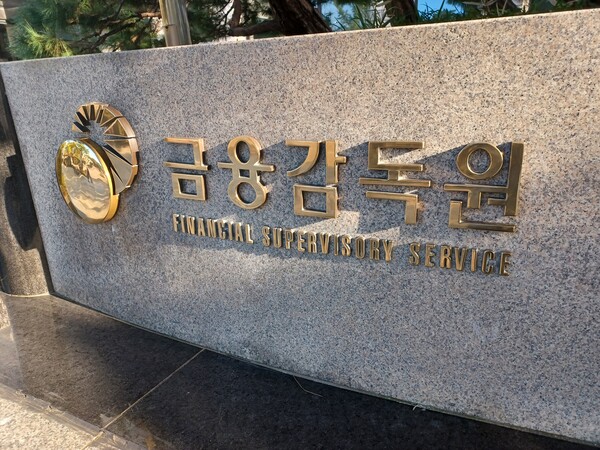
Whether the Financial Supervisory Service will be redesignated as a public institution for the first time in 18 years will be decided late this month. As the government moves to tighten management and control, conflicting values of regulatory independence and stronger public accountability are colliding, reigniting debate over the watchdog’s status and role.
The financial industry said on Jan. 11 that the government will hold a meeting of the Public Institutions Steering Committee late this month to deliberate and decide whether to newly designate or lift designations of public institutions.
Under the current Act on the Management of Public Institutions, the finance minister must review whether to designate public institutions within 1 month after the start of each fiscal year. That has raised the possibility that the FSS, which was removed from the list in 2009, could return to the designation process for the first time in 18 years.
The FSS was first designated in 2007 as an other public institution, then was removed as a public institution in January 2009 on the grounds of ensuring independence and autonomy in financial supervision.
The FSS is a non-profit special corporation established under the Act on the Establishment, etc. of the Financial Services Commission, and carries out core public functions of stabilising financial markets and protecting financial consumers. Its budget is funded not by the state treasury but by contributions from financial companies. It has been excluded from designation as a public institution on the grounds that it needs independence in personnel and organisational management as a supervisory body.
Still, criticism has repeatedly surfaced that it sits in a blind spot of management and supervision. The concern is that its authority is powerful, but control mechanisms are relatively weak. Discussion of redesignation as a public institution was revived after the 2017 hiring corruption case. Criticism over lax supervision and organisational management has continued each time a financial accident occurs.
In September last year, the ruling party and the government reviewed designating the FSS as a public institution along with a plan to integrate the Financial Services Commission with the Ministry of Finance and Economy during talks on restructuring financial bodies. Plans were also discussed to transfer the FSC’s financial policy function and to create a new integrated FSC-FSS body, but the plan was ultimately withdrawn. The process was reported to have kept alive concern over the need to designate the FSS as a public institution.
More recently, President Lee Jae Myung also mentioned in a cabinet meeting the need for accountability and control of public institutions, saying agencies in blind spots of management and evaluation should be put in order. With a broader push to tighten oversight across the public sector, the FSS’s status has again become a central point of debate.
FSS opposes public institution designation, citing fears of layered control
Inside the FSS, some expect possible staff departures along with the possibility of redesignation as a public institution. The FSS has about 2,300 employees, and about 100 resign each year. That is about 4 to 5 percent of its workforce, a relatively high turnover rate.
In addition, as of 2024, the average compensation per FSS employee was 108.52 million won, down from 2023 and 2022. Taking inflation into account, real wages were assessed as having fallen. There is also concern that if redesignation as a public institution follows, staff departures would accelerate.
The FSS is subject to a total wage cap system under public-institution budget guidelines and must receive annual budget approval from the FSC, making it difficult to flexibly expand staff and budgets in line with rising workloads. If it becomes a public institution, overall operations, including budget planning, management evaluation and executive oversight, would be incorporated into the Ministry of Finance and Economy’s management and supervision system.
FSS Governor Lee Chan-jin publicly stated opposition to the discussion on designation as a public institution. Lee said on Jan. 5, "There are considerable problems with designation as a public institution," adding, "I am in a position of persuading the government."
He said, "We do not have relatively high independence. We also do not have autonomous organisational authority over budgets and the organisation or fiscal autonomy, and we are in a poor situation that cannot be compared with the Bank of Korea."
He particularly referred to a structure in which the FSC already controls budgets and the organisation, saying, "The FSC makes all the budget and organisational decisions, so I basically cannot understand what they are trying to do by adding another layer on top." He added, "The independence and autonomy of the FSS are important values worldwide," and stressed, "I expect designation as a public institution probably will not happen."
By contrast, Financial Services Commission Chairman Lee Eok-won made remarks during a parliamentary audit last year suggesting the need to strengthen the FSS’s public functions, signalling support.
If the FSS is designated as a public institution, it would undergo annual government management evaluations under the steering committee’s operating guidelines. It could face penalties for non-compliance, along with evaluations of overall budget, personnel and expense operations, and is expected to come under dual control by the FSC and the Ministry of Finance and Economy.
A financial industry official said, "The market is focusing on what judgment the government will make between the independence and accountability of a supervisory body," adding, "With talk even of government-directed finance, no one can predict what will happen at this point."
 Lee Ji-young
ljy@d-today.co.kr
Lee Ji-young
ljy@d-today.co.kr