
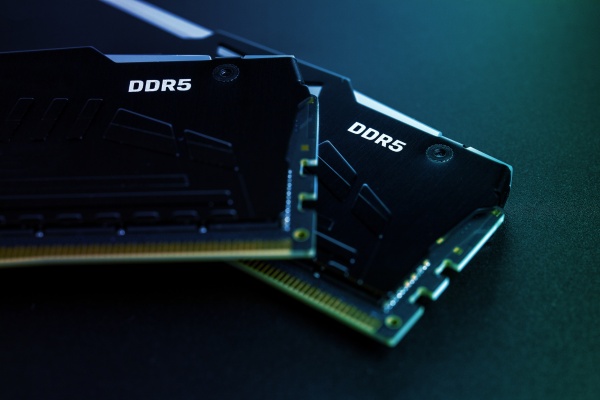
Prices for PC memory are rising sharply due to surging demand for artificial intelligence. Demand for high-bandwidth memory (HBM) used in AI data centres is pressuring memory production capacity and pushing up prices for consumer DRAM.
Online media outlet Gigazine reported on Aug. 10 local time that the price of DDR4 memory per 1 GB rose to about $8.41 in July 2026 from about $0.9 in 2024. That is an almost tenfold jump in about 2 years.
The current standard, DDR5, has also failed to avoid price increases. The price per 1 GB of DDR5 surged to $11.4 in July 2026 from about $2.2 in July 2025. That is a rise of more than fivefold in a year.
Memory prices have long shown a downward trend alongside advances in semiconductor technology. Improvements in process nodes and production efficiency made it possible to produce more memory at the same cost, steadily lowering the price per capacity.
But the recent situation is moving in the opposite direction. As AI data centres secure large amounts of HBM, memory makers' production capacity is being concentrated on AI products. HBM and general DRAM share parts of the manufacturing process, so a surge in HBM demand can affect the supply of commodity DRAM.
Software performance researcher Daniel Lemire has recently pointed out that RAM prices per capacity are returning to past levels. Current DDR5 prices were presented as similar to the period when DDR2 traded at about $11 to $15 per 1 GB in 2008.
Still, the price does not need to be taken as the average price of the overall memory market. The figures were calculated based on the lowest prices found in the consumer market, not contract prices or average selling prices. The Stanford DAM Project tracks the lowest price of consumer memory on sale at the time by converting it into 1 GB units.
Since mid-2024, the data has also reflected Keepa material tracking Amazon price histories. As a result, even for the same DDR4 or DDR5, the products used for price comparisons can change depending on the timing.
The gap between demand and supply is cited as the main reason for price rises. Elon Musk has also offered the view that memory output is rising by about 20 percent a year while demand is increasing by more than 200 percent annually. The numbers are estimates, but they show that AI memory demand is far outpacing the speed of existing semiconductor production capacity expansion.
The problem is that it is hard to predict when such supply-demand imbalances will be resolved. Lemire pointed to the need to reduce the amount of memory required by AI systems or to find ways to produce more memory faster, saying it is difficult to forecast what will happen next.
In the end, the AI boom is not only affecting costly data-centre HBM but also pushing up prices for commodity RAM used in PCs. The direction of DRAM prices for PCs and servers is also expected to be determined by when memory makers' capacity expansion and demand for AI HBM find a balance.
 Jinju Hong
hongjj@d-today.co.kr
Jinju Hong
hongjj@d-today.co.kr