
A suggestion has emerged that securing national-level sovereign AI competitiveness requires nurturing researchers and engineers who can directly develop and operate large-scale AI systems.
According to the SKT Newsroom on Wednesday, SK Telecom is developing technology to improve inference performance and computational efficiency for its own AI foundation model through joint research with the Massachusetts Institute of Technology (MIT) in the United States.
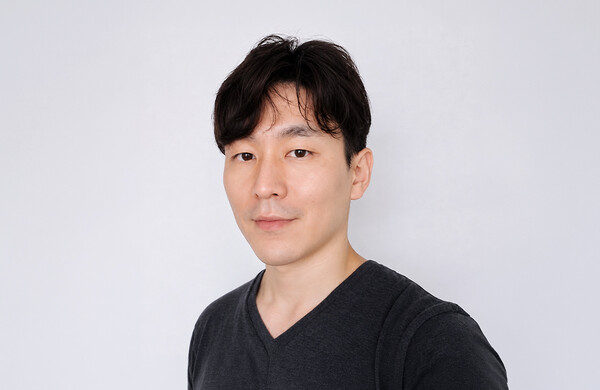
Kim Yoon-hyung (김윤형), a professor in MIT’s Department of Electrical Engineering and Computer Science who is conducting joint research with SKT on large language model (LLM) performance improvement technology using test-time training (TTT), cited talent and experience operating large-scale systems as core to sovereign AI competitiveness in a Newsroom interview.
“Computing resources can be bought with money and data centers can be built, but experience and capabilities from directly operating large-scale systems take much longer to accumulate,” Kim said.
AI performance currently depends on the ability to scale relatively simple algorithms to a large scale. That makes it important to secure researchers and engineers who can directly handle large systems.
He said that as AI has become a key factor in terms of national security, it is a natural direction for countries to build their own AI ecosystems. But he pointed out that if the goals of sovereign AI are confined too much within a framework of “sovereignty,” it could spur excessive competition rather than cooperation.
From that perspective, the joint research between SKT and MIT can be seen as a case of raising both technological competitiveness and operational capabilities for a homegrown AI model. TTT, which they are researching jointly, is a technique in which a deployed AI model performs brief additional learning based on relevant material before answering a specific question.
General language models are deployed in a fixed state after pre-training. But TTT uses part of its computing resources during inference to refine its performance before generating an answer.
Kim explained that AI advances over the past several years were mainly made by increasing the scale of pre-training, but it has recently been confirmed that performance can improve even if additional computing resources are投入 in the inference stage that generates answers.
“TTT started from the idea of what if the model uses part of its computing resources to solve a specific problem in front of it by itself,” Kim said. “It is an approach that can use computing resources in the inference stage to improve the model’s actual performance and capabilities.”
The research also focuses on helping AI agents accurately understand long contexts at low cost. Kim divided long-context understanding into “retrieval,” which finds needed information in vast text, and “integration,” which consistently grasps logical relationships across an entire document.
Current AI models perform retrieval tasks relatively well in long documents, but lack the ability to understand the entire content in an integrated way, such as detecting conflicts between earlier and later parts of a document, Kim said.
“Even a model that can theoretically process 1,000,000 tokens may not understand long contexts in the sense of integration,” he said. “To develop a practically useful AI agent, you need to build a system that deeply understands long contexts.”
SKT expects it can use the results of the joint research to improve inference performance for its homegrown AI foundation model, A.X K2, which it recently unveiled.
Recent research has confirmed that increasing computation in the inference stage can continuously improve LLM performance in reasoning domains such as solving math problems. Applying TTT can deliver higher performance with the same inference computing resources, or achieve the required performance at lower cost.
“The TTT technology to be developed in this joint research could dramatically improve efficiency by increasing performance relative to the inference computing resources投入 by SKT’s homegrown AI foundation model,” Kim said.
“For a leap forward in AI, the capabilities of academia exploring new possibilities must be combined with the capabilities of companies using technology in practical ways,” Kim said. “The partnership between SKT and MIT will be an excellent example that shows this.”
On South Korea’s homegrown AI foundation model project, he advised that it should prioritize how much it has narrowed the performance gap with leading global models over new ideas.
“In the second evaluation, it is desirable to give higher priority to how much the gap has been narrowed based on the core benchmarks that global model developers actually use,” he said. “Reducing the gap with existing frontier models means you can properly execute known technologies and development methods in a large-scale environment.”
 Jin-ho Lee
jhlee26@d-today.co.kr
Jin-ho Lee
jhlee26@d-today.co.kr