
[DigitalToday reporter Chi-gyu Hwang (황치규)] Open-source technology MCP, used to connect AI applications, has been updated in its biggest release since launch.
SiliconANGLE reported on July 28 that the update focuses on revamping metadata processing, strengthening authentication security and adding an extension framework.
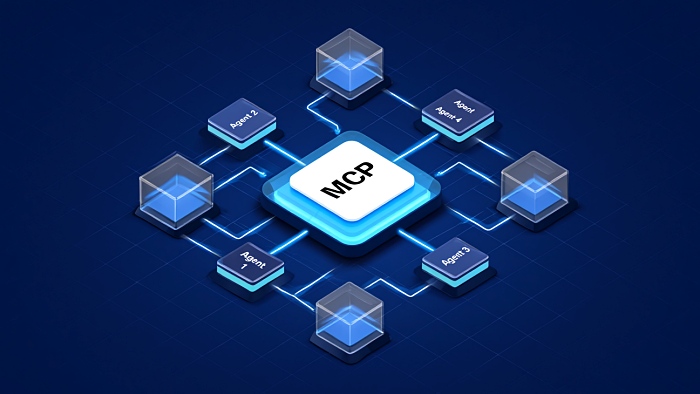
MCP is a technology that helps AI applications interact with external systems. Like USB-C connecting devices from different makers to a range of peripherals, developers can use MCP to enable AI apps or agents to communicate with other apps and web services.
Through MCP, AI agents can retrieve records from databases or modify product catalogues at online shopping malls. Anthropic open-sourced the technology in November 2024 and, about a year later, handed management to the Agentic AI Foundation, an industry consortium under the Linux Foundation. Major technology companies including Anthropic and OpenAI are participating in the Agentic AI Foundation.
The biggest change is how request metadata is handled. Under the previous MCP, AI applications sent context information such as the protocol version along with requests to external systems through a relatively complex process. The new version removes that process and shifts to a stateless protocol core that embeds metadata directly in the request itself.
That makes it easier to scale MCP applications when traffic surges. Recovery work after server outages also becomes simpler. Previously, requests and metadata were sent to only one of several servers, raising the risk of service disruption if a specific server ran into problems and increasing complexity as systems scaled.
Authentication has also been improved. It also reduces the risk of OAuth mix-up attacks that can allow hackers to steal login credentials.
A new extension framework has also been added. Developers can use it to attach customised features to MCP core functions. Built-in extension libraries are included as well. MCP Apps provides management features for long-running AI agent workflows, and EMA simplifies some cybersecurity tasks.
 Chi-gyu Hwang
delight@d-today.co.kr
Chi-gyu Hwang
delight@d-today.co.kr