
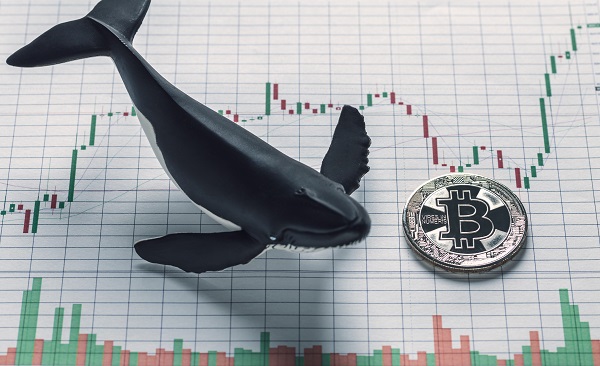
Bitcoin continues to trade below $69,000, a level seen as the average cost basis for short-term holders. That makes the U.S. Federal Reserve decision scheduled for July 29 a pivotal test of whether the rebound can continue.
According to blockchain outlet CryptoSlate, the current bitcoin rebound relies heavily on inflows into spot exchange-traded funds (ETFs) and buying by large wallets holding 1,000 to 10,000 bitcoin.
Recent market expectations are based on weaker employment and cooling inflation indicators. Nonfarm payrolls in June rose by only 57,000 and the unemployment rate held at 4.2 percent. Job gains for April and May were also revised down by a combined 74,000. Core consumer price index (CPI) growth slowed, unchanged month-on-month and up 2.6 percent year-on-year.
Oil prices and government bond yields are also acting as factors that constrain bitcoin's upside. Brent futures ended this week around $94 a barrel and at one point during the session hit $95.47. The 10-year U.S. Treasury yield rose to around 4.67 percent, and the 30-year yield stayed above 5 percent for 11 straight trading days.
That has led markets to again price in the possibility of a rate hike in July. A Chicago Mercantile Exchange (CME)-based indicator put the probability of a July rate hike at 33.7 percent. That was up from 25.7 percent a day earlier.
On-chain analytics firm Glassnode viewed weak jobs data and a surge in oil prices as potentially being reflected at the same time in the Fed decision, meaning bitcoin may have already priced in part of an optimistic scenario.
In fact, short positions were liquidated and downside hedges fell sharply. Exchange inflows dropped to their lowest level in weeks, easing selling pressure. Spot bitcoin ETFs recorded net inflows for six straight sessions from July 14 to 21, pulling in about $930.2 million. That reversed $424.7 million of outflows seen through July 13.
Still, buyers are limited. Recent accumulation has mainly come from wallets holding 1,000 to 10,000 bitcoin. This range is typically classified as fund-like wallets and those tied to large trading desks. Mid-sized holders, by contrast, resumed distribution selling, and broad market indicators still pointed to “risk-off”. Glassnode said, “A narrow range of large buyers and new ETF demand are supporting the rebound on expectations of a Fed pivot that has not yet occurred.”
The bond market is also a factor pressing on bitcoin's upside. Glassnode, in a previous report, suggested 4.45 percent as the upper limit for the 10-year U.S. Treasury yield that risk assets can withstand, but the current yield is 4.67 percent. The dollar index (DXY) is also around 101.14, above the 99 threshold suggested by Glassnode. This suggests the inverse correlation between bitcoin and the dollar is deepening.
The path ahead depends on the Fed’s message and the direction of oil prices. For an optimistic view to be realised, the Fed would need to hold rates and see weakening in the labour market as the bigger risk. At the same time, Brent would need to fall toward $74, the U.S. Energy Information Administration (EIA) third-quarter forecast, and the 10-year yield would need to drop below 4.45 percent. In that case, ETF inflows would continue, buyers would spread beyond whale wallets, and $69,000 and the $84,000 range would be cited as new target areas for bitcoin.
Conversely, even if the Fed holds rates, the tone could change if oil stays high and the Fed leaves the door open to future hikes. If Brent remains near $94 and the 30-year yield stays above 5 percent, the carrying cost of holding bitcoin, an asset without interest income, will keep rising.
On the downside, the $63,000 zone is becoming important again. Glassnode viewed roughly 10 percent of total supply as concentrated at that price level. If bitcoin reclaims $69,000 and broader participation is confirmed, it could be interpreted as a signal of returning institutional demand. If it fails to regain $69,000 and slips back toward $63,000, it will test whether the recent rebound amounted only to a tactical bet.
Ultimately, whether this rebound lasts depends on whether buying centred on ETFs and large wallets spreads to broader market participation. If rates, the dollar and oil prices stabilise at the same time after the Fed decision, bitcoin could try again to break through the upside. If macro pressures persist, $69,000 is likely to remain short-term resistance.
 Yoonseo Lee
yslee@d-today.co.kr
Yoonseo Lee
yslee@d-today.co.kr