
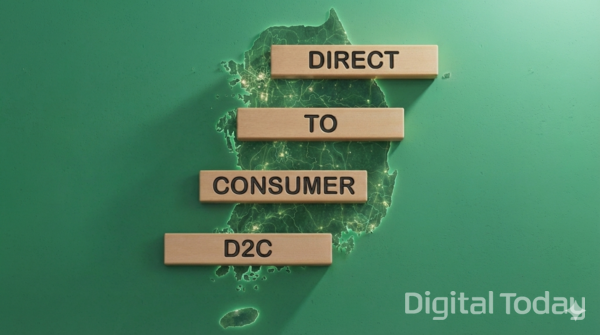
In 2026, the e-commerce market is expected to grow to 300 trillion won. The reality founders feel is different. As the market has grown, competition has become more intense. Starting on a major platform may look good at first, but over time there are also burdens such as fees and changes to exposure algorithms.
As a result, interest is steadily growing in direct-to-consumer (D2C) sales through a company’s own online store. As D2C success cases increase, more people are trying to start businesses with their own stores, the industry explains.
Fees, settlements and algorithms ... why D2C is drawing attention
According to global market research firm eMarketer, the global e-commerce market this year is projected at $6.88 trillion (about 10 quadrillion won). JPMorgan expects domestic online shopping transaction value to exceed 300 trillion won.
The e-commerce market continues to grow rapidly, but the industry is structured so major platforms control the landscape. The fruits of growth are also being concentrated in the platforms.
Small and midsized sellers that join open markets and general shopping malls are struggling with high fees and opaque settlement structures. Last year’s TMON and WeMakePrice settlement delay incident showed risks that can arise when dependence on platforms is high.
A company-run online store is drawing attention as an alternative that can reduce these risks.
Operators with competitive products can contract directly with payment gateway (PG) companies through their own stores to shorten settlement cycles and manage sales data themselves. They are also relatively free from platform policy changes or fee increases. Recent issues that shook South Korea’s distribution market, including the so-called "Timep incident" and the "C-commerce assault," are seen as having reinforced the view that building a D2C brand is not simply an expansion of sales channels but a necessary condition for managing business risks.
A company-run store is also advantageous for brand differentiation. A person in the e-commerce industry said, "A D2C shopping mall can move away from price comparison platforms and offer a brand’s own story and services." The person added, "Operating a company-run store is essential to raise repeat purchase rates and secure loyal customers."
More opportunities overseas amid the K-culture boom ... interest in 'one-stop solutions'
D2C can also be an opportunity for global expansion. Interest is especially high in D2C that leverages K-culture. The idea is that if global fandom captivated by K-content can be brought into D2C shopping malls that carry K-brand stories, companies can secure growth momentum.
According to an analysis by the Export-Import Bank of Korea, when K-content exports increase by $100 million, consumer goods exports rose about 1.8 times. JYP, YG and SM, which have a high share of global sales, as well as Samyang Foods and Nongshim, which are drawing attention for K-food, and K-beauty brand Sister Ann are conducting global direct sales.
They were built on the global e-commerce platform Cafe24. Cafe24 standardises and provides payment (PG) and logistics infrastructure, cited as the biggest hurdles to overseas sales, lowering barriers to entry.
It can connect to local payment networks including PayPal and Alipay, as well as Japan’s SBPS and Southeast Asia’s MolPay. For logistics, global networks including EMS and DHL, as well as Japan’s Sagawa and maritime carrier PanStar, can be integrated and managed within the platform.
A person in the e-commerce industry said, "This year, companies that reduce dependence on platforms and secure their own customer data will have competitiveness." The person added, "Even early-stage founders can build a business model centred on their own online stores if they use appropriate IT infrastructure."
 Seulgi Son
sageson@d-today.co.kr
Seulgi Son
sageson@d-today.co.kr