
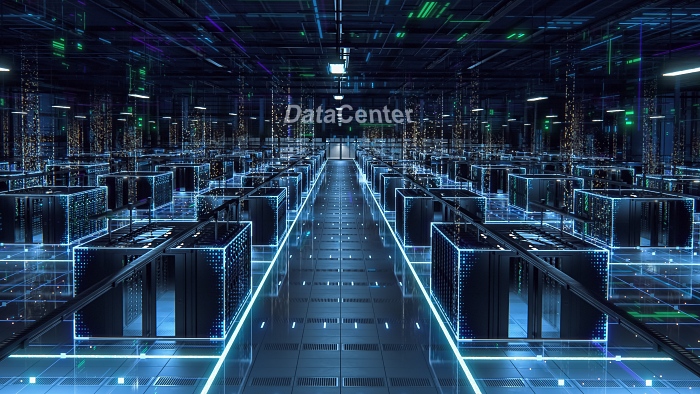
A call is growing to improve the power supply system, which varies by region, to speed up the spread of AI data centres. The view is that power should be supplied smoothly not only outside the capital region but also in the Seoul area to expand the footprint of AI data centres.
Park Jong-bae, a professor in the Department of Electrical and Electronic Engineering at Konkuk University, said this on Thursday at a forum at the National Assembly Members’ Office Building on practical power supply measures for AI data centres. The forum, hosted by lawmaker Lee Hae-min of the Rebuilding Korea Party, discussed the spread of AI data centres and effective power supply and demand measures to help South Korea become one of the world’s three leading AI powers.
Park said South Korea’s electricity demand is concentrated in the Seoul area. He also said power plants are clustered outside the capital region, creating an imbalance in power supply and demand. He called the shortage of transmission lines needed to send electricity to the Seoul area a task that must be resolved.
Park said data centres are currently concentrated mainly in the Seoul area, and applications for power use by data centres to be built in the future are also concentrated there. He said the Seoul area lacks transmission lines, making new permits almost impossible in the short term.
Park said the short-term approach should be to encourage AI data centre construction mainly outside the capital region and to steer construction in the Seoul area after 2030, when transmission lines are expanded. He argued for allowing direct power purchase agreements (PPA) between AI data centres outside the capital region and nearby generators, while sharply cutting transmission fees to reduce the burden of building a nationwide transmission network.
Cho Dae-geun, an adviser at law firm Kim & Chang, reviewed the issue of high power demand from AI data centres, which use more electricity than existing data centres. He also stressed that AI data centres can be completed within 1 to 2 years once construction begins, but grid expansion can take up to 10 years, and that time gap must be considered.
Cho said institutional and policy support is needed to bridge the time gap between power supply and demand. He said regulatory easing should be pushed quickly.
Cho said a PPA model commonly used by overseas big tech AI data centres could also be an answer. He said South Korea should exempt an AI data centre from power system impact assessments if a direct-supply PPA means it does not use the existing power grid at all.
Domestic data centre operators also called for institutional changes to speed up AI data centre construction. Cho Jung-min, executive vice president in charge of data centre business at SK Broadband, said easing rules that slow construction would also speed up the use of advanced GPUs. With the government deciding to secure an additional 260,000 Nvidia GPUs by 2030, he said South Korea should accelerate the spread of AI data centres to house them.
Cho said even an excellent swimmer cannot train without a pool and water. He said it appears South Korea does not have much time, given the pace of rapid technological development.
Lee said she recently proposed a special bill to promote AI data centres. The bill focuses on regulatory reforms such as allowing PPAs for AI data centres outside the capital region and introducing a timeout system for permits. Lee said AI, AI data centres and power supply should not become subjects of political confrontation and stressed the need for discussions centred on the field.
 Jin-ho Lee
jhlee26@d-today.co.kr
Jin-ho Lee
jhlee26@d-today.co.kr