
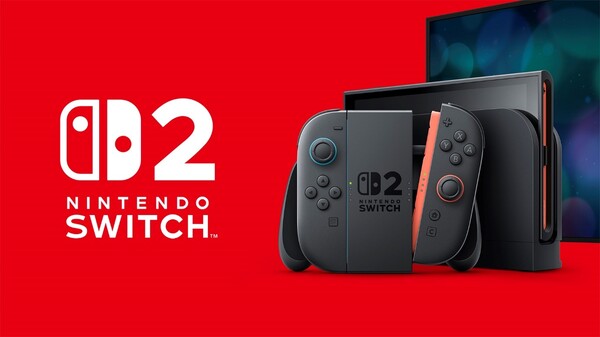
Nintendo’s next-generation Switch 2 achieved record sales after launch and was a major market success, but its sales momentum slowed in key markets in the United States and Europe during its first year-end season.
Ars Technica reported on Wednesday that with most of the initial surge in demand already absorbed, it has been difficult for the new console to secure its own growth engine, amid continued sales of the original Switch and the influence of existing popular games.
In the United States, Switch 2 unit sales in November to December fell about 35 percent from the same period for the original Switch in 2017. Sales in Britain fell 16 percent from the previous model, and dropped 30 percent in France. Across major European markets, initial explosive demand appeared to have stalled faster than expected during the Christmas season. In Japan, sales over the same period fell just 5.5 percent from the original Switch, while annual sales rose 11 percent. This was seen as helped by the launch of a low-priced Japan-only model and by not being affected by international exchange-rate fluctuations.
The Switch 2’s relative weakness appears to have been partly influenced by continued sales of the original Switch. In Britain, the original Switch continued to post strong sales, lifting Nintendo’s overall year-end hardware revenue by about 7 percent from 2017. With most pent-up demand met due to record initial demand, limited incremental sales of the new console also contributed to the slowdown.
The slowdown is also tied to a lack of exclusive hit games. In 2017, the original Switch maximised holiday-season expectations ahead of the release of Super Mario Odyssey and drove sales alongside existing hit titles such as The Legend of Zelda: Breath of the Wild and Mario Kart 8 Deluxe. Switch 2, despite holiday releases including Pokemon Legends Z-A and Metroid Prime 4 Beyond, did not sufficiently drive early system sales. The assessment is that it did not fully captivate the existing fan base, and its impact was limited compared with established hits in prompting purchases of the new system.
Nintendo’s software strategy in 2026 is largely built around sequels to existing second-tier franchises and some upgraded editions. Yoshi, Mario Tennis and Fire Emblem aim at their existing fan bases, and some popular games are also scheduled for Switch 2-only remasters under a “Switch 2 Edition” label. FromSoftware’s Duskblood is also set to be released as a Switch 2 exclusive title, and is seen as having the potential to draw soulslike fans back into buying the hardware.
Switch 2’s first holiday sales slowdown can be seen as a somewhat worrying signal compared with its record early success, and recovery of its market standing will largely depend on exclusive releases and a stronger software lineup. Attention is on how much Nintendo’s 2026 strategy and new title announcements will lift remaining demand and contribute to meeting annual sales targets.
 Kyungmin Hong
hongm@d-today.co.kr
Kyungmin Hong
hongm@d-today.co.kr