
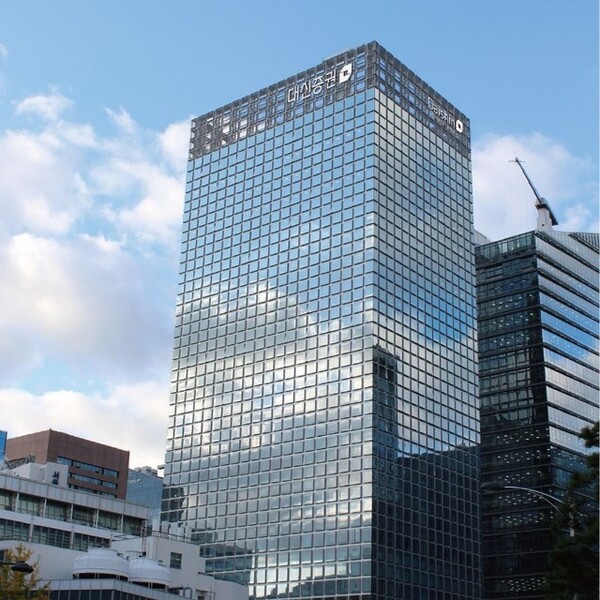
Daishin Securities has been raided over alleged stock price manipulation involving a KOSDAQ-listed company, reviving a broader debate over the effectiveness of internal controls in the brokerage industry. With the KOSPI breaking above 6,000 and capital markets in a boom, concerns are growing about a loss of trust in the sector.
Industry sources said on Feb. 26 that the Seoul Southern District Prosecutors Office's Joint Investigation Division for Financial and Securities Crimes recently carried out search and seizure operations at Daishin Securities' headquarters in Jung-gu, Seoul, and other locations. The move is aimed at investigating allegations that a manager-level employee, identified as A, violated the Capital Markets Act, the Act on Real Name Financial Transactions and Confidentiality, and the Electronic Financial Transactions Act.
A is suspected of colluding with outside price manipulation actors over several months from late 2024 to artificially boost the share price of a KOSDAQ-listed company.
During that period, the stock, which had been in the mid-1,000 won range, surged to the 4,000 won range. Prosecutors believe the group’s illicit gains amounted to tens of billions of won.
Daishin Securities said it proactively detected signs of A's unusual trading through an internal audit in June last year. Based on the results of its internal probe, it filed a criminal complaint against A at Seoul Namdaemun Police Station in August last year. After severe internal disciplinary action, A was dismissed and left the company around year-end.
The company drew a line on the case, saying, "It is a rogue act by an individual employee, not an organised intervention by the company or a failure of management and supervision."
It also stressed, "Efforts to upgrade the internal control system and strengthen the professionalism of the compliance monitoring organisation, pursued companywide since the Lime incident, contributed to early recognition of this case."
Still, some observers say the focus of the investigation could expand beyond an individual’s misconduct to whether there was organisational involvement or broader failures in oversight, given that prosecutors launched a forced investigation involving a headquarters raid into a matter that had already been reported.
Daishin Securities has a track record of selling large-scale funds by violating its duty to disclose poor risk warnings, centred on its Banpo WM Center, during the 2019 suspension of redemptions at Lime Asset Management funds.
At the time, the centre head was sentenced to 2 years in prison, and the company promised to strengthen internal control standards. It later also became embroiled in controversy during the sale of Optimus funds.
After overcoming that past, Daishin Securities was designated in December 2024 as South Korea’s 10th comprehensive financial investment business operator after meeting the 3 trillion won equity capital requirement.
But market concerns are being raised as the negative development of a manager-level executive’s alleged involvement in stock price manipulation emerges at a critical time as it prepares to make the leap to a mega investment bank (IB).
Internal control risk is not just a Daishin Securities issue. Prosecutors raided the headquarters of NH Investment & Securities and Samsung Securities to confirm allegations of using undisclosed information that surfaced during a share buyback agency process at Meritz Financial Group late last month.
Internal control controversies have not let up, with the number of major disciplinary cases involving illegal acts by employees of major brokerages over the past 3 years exceeding 400.
Financial Supervisory Service data showed that brokerages received a total of 55 inspections and sanctions from financial authorities last year, more than doubling from 23 cases the previous year.
Lee Chan-jin (이찬진), head of the Financial Supervisory Service, said at a meeting of brokerage CEOs held on Feb. 10, "Unfair trading by some employees and uninterrupted financial incidents are clear examples of internal control failures." He added, "It is time to establish an internal control system based on autonomy and responsibility, not regulation."
With a string of incidents, brokerages are moving to restore trust by upgrading organisations and creating dedicated departments reporting directly to the company president.
NH Investment & Securities set up an internal controls task force reporting directly to the company president, with the CEO personally serving as team leader, after allegations grew last year that a senior executive used undisclosed information. It also introduced a system that completely bans stock trading by all executives.
Korea Investment & Securities formed a consumer protection task force reporting directly to the company president in response to past concerns over misselling of funds. SK Securities also strengthened board-led responsible management after the fallout from the Mugunghwa Trust stock collateral loan incident and elevated related organisations, including its financial consumer protection office, to headquarters-level units.
Still, within the financial investment industry, some voices say such measures amount to after-the-fact prescriptions focused only on damage control after incidents occur.
A brokerage industry official said, "With individual investors flowing in amid the recent boom in the domestic stock market and disputes increasing accordingly, there is a need for fundamental system improvements to build a constant monitoring system and prevent financial incidents in advance."
 Sangyeob Oh
yub@d-today.co.kr
Sangyeob Oh
yub@d-today.co.kr