
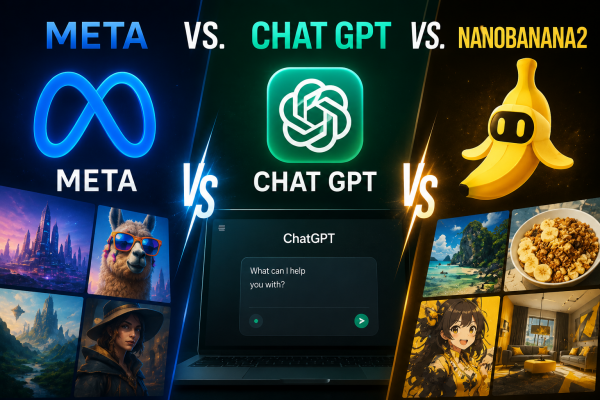
Meta has unveiled a new AI image generation model, making a full-scale push into the generative AI image market. In a comparison test using identical prompts, ChatGPT received the highest overall marks for prompt comprehension and consistency.
TechRadar, an IT media outlet, reported on July 13 local time that a comparison test using five prompts assessed Meta's new model, OpenAI's ChatGPT and Google's image generation model Nano Banana 2. The assessment produced those results.
The tasks were made up of high-use cases, including creating a product poster, generating a wildlife photo, producing an Instagram promotional image, a four-panel comic and a noir-style comic scene.
All three models generated images above a certain standard, but their strengths differed. Meta showed presence in the texture and staging of commercial images and in creative comic scenes, while Nano Banana 2 delivered stable results in realistic expression. ChatGPT was rated as leading overall by reflecting prompt intent most accurately.
The first task was to create an advertising poster for a fictional sparkling water brand, Moon Orchard. The test assessed not only product design but also the ability to reproduce specified phrases accurately. ChatGPT produced a polished layout close to a real advertisement, while Nano Banana 2 generated a magazine-ad style result. Meta delivered the strongest visual finish, including water droplets on the can surface, but ChatGPT was judged a step ahead in overall prompt understanding.
In the realism test, the models generated an image of a red fox walking through a snow-covered forest. ChatGPT chose a cinematic composition, while Nano Banana 2 produced an outcome closer to a natural photograph. Meta staged the most dramatic scene, but some background elements were rated as looking somewhat artificial.
Differences were clearer in promotional images for social networking services. In a task to create a square Instagram post promoting a summer garden party, ChatGPT earned the highest rating by blending the wording naturally into the image design. Nano Banana 2 produced a layout closer to a flyer, while Meta created an atmosphere closer to an actual event photo than an invitation.
All three models delivered relatively stable results in generating a four-panel comic. In a task requiring a robot character named Pip to remain consistent across all four frames while making pancakes, ChatGPT produced the easiest-to-read layout and natural humour. Nano Banana 2 delivered a clean comic style, while Meta had high overall completion but showed expressions that differed from the intent in some scenes, such as adding speech bubbles to the pancakes.
Meta received its highest marks in a creative task that blended styles. In a test combining the atmosphere of a 1940s black-and-white noir film with a Saturday morning cartoon style to tell a private detective story tracking down missing cookies, Meta produced the most distinctive result by actively using visual humour and clue placement. TechRadar rated Meta as most effectively harmonising the two contrasting moods in the prompt.
Overall, ChatGPT ranked first. The evaluator said, "All three models were able to generate excellent images, but the differences appeared in how accurately they understood the prompt," and added, "ChatGPT more consistently delivered what users actually intended than rival models." Meta produced eye-catching results in some tasks, but ChatGPT was rated as showing more stable performance overall in reflecting wording, interpreting intent and composing images.
The comparison also showed that competition in image-generation AI is not decided solely by image quality or realism. In tasks users often face, such as reproducing specified phrases, interpreting scene intent and maintaining continuity in a sequential narrative, which model operates more consistently is emerging as the core of competitiveness.
The industry is assessing that Meta's new model showed competitiveness in creative staging and producing commercial images, but that ChatGPT remains a step ahead in overall real-world usability and prompt understanding.
 Jinju Hong
hongjj@d-today.co.kr
Jinju Hong
hongjj@d-today.co.kr