
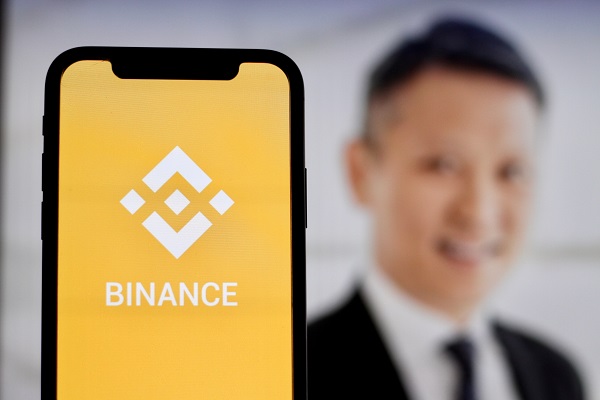
Richard Teng (리처드 텡), co-chief executive of Binance, argued that cryptocurrencies should no longer be viewed as simple trading assets but as foundational infrastructure that keeps financial systems running.
On July 7, blockchain outlet Cryptopolitan reported that Teng said in a recent podcast appearance that crypto is changing the structure of financial services by enabling continuous market operations and faster payments.
He cited trading speed and market opening hours as crypto’s competitive strengths. He pointed to limits in traditional finance, where stock and bond trading is handled only during set business hours, making it hard for investors to hedge or unwind positions immediately even if major news breaks after the close. He also cited the continued use of T+2 settlement at many stock exchanges, which leaves capital exposed to counterparty and market risks for 2 days.
By contrast, crypto markets often operate 24 hours a day and settle trades much faster, he said. In some on-chain environments, transactions can be completed almost instantly without passing through multiple intermediaries. Teng said crypto has already moved to atomic settlement and that technology makes instant settlement possible.
He linked this view to Binance’s business direction. Teng said users want a range of tools and services on a single platform to participate in digital asset markets, not just spot trading. Binance has expanded its services to meet that demand and aims to build a "financial super app" that offers broader financial functions beyond crypto, he said. However, the scope of products and features varies by country depending on regulations, and it does not offer the same services in every region.
Teng said tokenisation of real-world assets, or RWAs, is part of the same trend. He cited a growing number of cases in which traditional financial products such as government bonds, credit and commodities are traded in token form on blockchains. On-chain real-world assets excluding stablecoins have nearly tripled over the past year to reach $32.6 billion, based on figures compiled by RWA.xyz.
Teng said the reasons institutions are showing interest in tokenisation are not different from the broader advantages of crypto. Continuous market operations, operational efficiency and fast settlement are drawing institutional demand, he said. "As stablecoins grow rapidly and real-world assets and tokenisation expand, existing networks like SWIFT are in a situation where they have no choice but to consider blockchain support," he said.
He also said the design of financial companies itself could change. Teng said if future financial services are redesigned based on today’s tools, architecture and infrastructure, newly created banks or asset managers would not follow the same models as in the past. As blockchain-based systems spread, the basic structure of financial services could also change, he argued.
He also noted a shift in views in traditional finance. Teng cited BlackRock’s Larry Fink and JPMorgan’s Jamie Dimon, saying that as market participants gain a deeper understanding of blockchain-based systems, they are becoming more open to use cases such as tokenisation. As a result, competition in crypto markets is increasingly likely to be driven less by price volatility than by payment structures and the speed of transition in financial infrastructure.
 Yoonseo Lee
yslee@d-today.co.kr
Yoonseo Lee
yslee@d-today.co.kr