
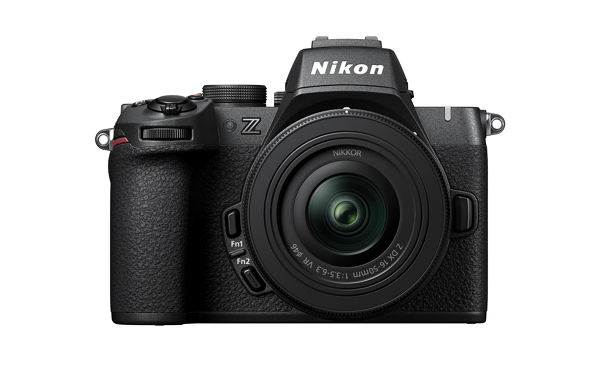
Nikon has hinted, in recent materials related to its performance, that demand for APS-C cameras is outpacing full-frame models. That has drawn attention to whether its future new-product strategy could be reshaped around APS-C.
TechRadar, an IT media outlet, reported on Tuesday that Nikon said in a survey tied to its fiscal 2025 second-quarter financial results that market trends show APS-C products gaining popularity over full-size products. The company is, in effect, officially acknowledging that amid high inflation and heavier living-cost burdens, relatively cheaper and more portable APS-C cameras are being chosen by consumers.
APS-C sensors are smaller than full frame, allowing smaller and lighter camera bodies and lenses, and offering stronger price competitiveness. They have limits compared with full frame in image quality, noise control and depth-of-field expression. Still, they offer better image quality and background blur than smartphones or compact cameras, securing broad demand from beginners to intermediate users. Structurally, the difference is such that two APS-C sensors can fit into the area of one full-frame sensor.
Nikon currently has an APS-C mirrorless lineup including the Z50 II, Z30 and Z fc, but it lacks a professional flagship APS-C model. No mirrorless model has been released to carry on the line since the APS-C DSLR D500, which had been highly rated among sports and wildlife photographers. That has led to speculation that a D500-class APS-C mirrorless camera could emerge with higher resolution, faster continuous shooting and dust- and moisture-resistant design.
Possible change is also being discussed in the entry-level market. The Z30, released some time ago, drew popularity among beginners for its reasonable price and video performance, but it has been cited for limits including the lack of an electronic viewfinder and a headphone jack, and lower pixel count versus competing products. That has led to expectations a successor could appear focused on higher resolution and stronger video features.
The retro-styled Z fc is also nearing 5 years since launch, raising talk of a generational shift. The industry sees that if an APS-C retro model is released with faster continuous shooting and stronger video features through a latest image processing engine and improved sensor performance, it could absorb demand as an alternative to the full-frame Z f, which carries a heavy price burden.
The industry views Nikon's moves as a natural flow linked to competitors' strategies. Canon has already introduced the APS-C mirrorless EOS R7 with dust- and moisture-resistant design and high-speed continuous shooting, and Sony is also targeting the market with the video-focused APS-C model FX30. With APS-C matching consumer trends that value price-to-performance and portability, assessments say Nikon could draw in intermediate and professional users if it strengthens its lineup in this area.
 Kyungmin Hong
hongm@d-today.co.kr
Kyungmin Hong
hongm@d-today.co.kr