
SK On said on Jan. 8 it developed a high-density single-crystal cathode electrode made up of large particles with a research team led by Professor Ki-Seok Kang at Seoul National University. It received an assessment that it identified technical challenges in synthesising single-crystal cathode materials and proposed a new synthesis route. The findings were published in Nature Energy, regarded as the world's most authoritative academic journal.
Polycrystalline cathode materials currently used in the industry have a structure in which multiple particles are clumped together. Cracks can occur in the particles during the rolling process or during charging and discharging, creating the possibility of internal gas generation.
Single-crystalline cathode materials consist of a single unit particle with a uniform crystal structure. Cracks do not occur easily, giving them strong stability and long life. But single-crystal cathode materials face a limitation because it is difficult to grow particles to be large and uniform while also securing structural stability during material synthesis.
Cathode materials with high nickel content require high-temperature, long-duration heat treatment to form single crystals. In such cases, a cation disorder phenomenon appears, creating a problem in which battery performance and life decline.
SK On and the Seoul National University researchers devised a new synthesis method. They first make a sodium-based single crystal that has strong structural stability and is easy to grow, then replace it with lithium through ion exchange. The researchers focused on large-particle single crystals that are advantageous for achieving high energy density and analysed optimal synthesis conditions and the structure formation mechanism, including chemical composition, temperature and time.
As a result, they developed an ultra-high-nickel single-crystal cathode material composed of particles 10 micrometres in size, about 2 times the particle size of general cathode materials, and with no cation disorder. Ultra-high nickel means the nickel content in the cathode material exceeds 94 percent, giving it high energy density that can increase driving range on a single charge of an electric vehicle.
According to SK On, the single-crystal cathode material showed strong mechanical and chemical stability and high energy density. Tests showed that the absence of cation disorder reduced structural deformation, and the amount of gas generation fell 25 times compared with polycrystalline cathode materials. Energy density reached up to 77 percent of theoretical crystal density. Theoretical crystal density is the maximum density assumed under a perfect crystal state with no defects or impurities.
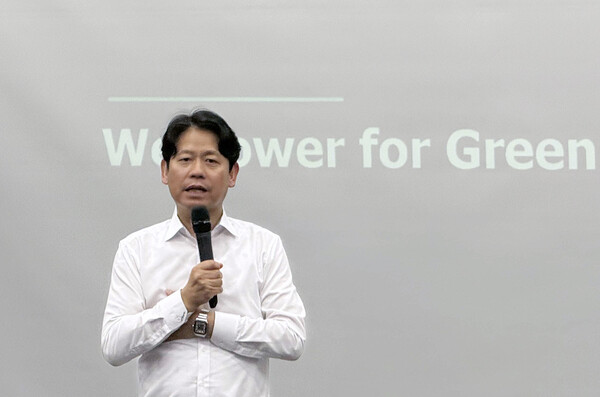
Park Ki-soo, head of SK On's Future Technology Institute, said, "This research achievement is a case that clearly shows the technological competitiveness SK On has in the battery materials field." He said, "We will continue innovative research and development through cooperation with academia and strengthen our technology leadership."
 Daegeon Seok
d2dg@d-today.co.kr
Daegeon Seok
d2dg@d-today.co.kr