
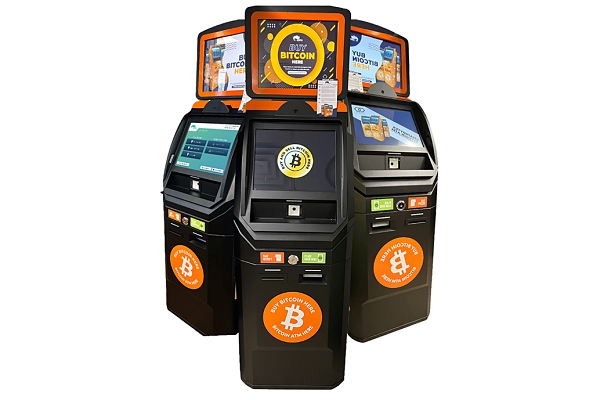
U.S. states Delaware and New Jersey have each moved bills for a blanket ban on cryptocurrency ATMs to the floor stage of their legislatures.
Cointelegraph, a blockchain media outlet, reported on June 11 that the two states are pursuing legislation to block the ownership, installation and operation of cryptocurrency ATMs after judging they are mainly being used for fraud.
Delaware's House Economic Committee on June 10 sent House Bill 441 to the full House. The bill's core provision is a ban on the ownership, installation and operation of cryptocurrency ATMs. New Jersey's Senate Commerce Committee also unanimously advanced a bill on June 9 to ban cryptocurrency ATMs to the full Senate.
The legislation is effectively aimed at pushing cryptocurrency ATMs out. The Delaware bill would also ban payment terminals and checkout transactions that replace ATMs or perform similar functions by exchanging cash and cryptocurrency. If the bill is finally passed and signed, existing cryptocurrency ATMs must be removed within 90 days.
The bills also include penalty provisions. Delaware would be able to impose fines of up to $10,000 for violations and require fees to be refunded to users if illegal operations are found. If users cannot be identified, the amount must be paid into the consumer protection fund. New Jersey included provisions to impose fines of up to $10,000 for a first violation and up to $20,000 for repeat violations.
The legislative push follows a surge in fraud losses. The Federal Bureau of Investigation said it received about 13,500 complaints related to cryptocurrency ATMs in 2025, with losses exceeding $388 million. Compared with 2024, complaints rose 23 percent and losses rose 58 percent. More than half of all complaints involved people aged 50 and older, and losses exceeded $302 million.
Cindy Romer (신디 로머), a Delaware state representative who introduced the bill, pointed out that "cryptocurrency ATMs are disguising digital assets as a means to plunder cash." She said ordinary cryptocurrency traders do not use cryptocurrency ATMs much because of far higher fees, adding that online exchange fees are around 0.4 percent to 1 percent while cryptocurrency ATMs can exceed 20 percent of the transaction amount.
Such regulation is spreading to other states. Indiana signed related legislation in March, becoming the first in the United States to ban cryptocurrency ATMs. Tennessee moved to a blanket ban in April and Minnesota in May. Some cities have passed separate ordinances or are reviewing them, while some states including Arizona and California are responding by setting transaction limits instead of an outright ban.
Regulatory pressure is also affecting operators. Bitcoin Depot, which was once considered the largest operator with more than 9,000 kiosks worldwide, cited regulatory pressure as one of the reasons behind its bankruptcy filing last month.
Operators, however, are drawing a line at claims that the machines themselves cause fraud. Bitcoin Depot said during an investigation in December last year that it cannot be held responsible for criminal acts by third-party scammers, and it explained that it has strong warnings and safeguards on device screens and during the transaction process. Some operators are in fact trying to reduce illegal transactions by introducing on-screen warnings and their own transaction limits.
The regulatory trend in the United States is shifting toward treating cryptocurrency ATMs as a direct target for blocking fraud. Another point to watch will be whether the Delaware and New Jersey bills pass in final form, along with whether other states tighten regulation through outright bans or transaction limits.
 Yoonseo Lee
yslee@d-today.co.kr
Yoonseo Lee
yslee@d-today.co.kr