
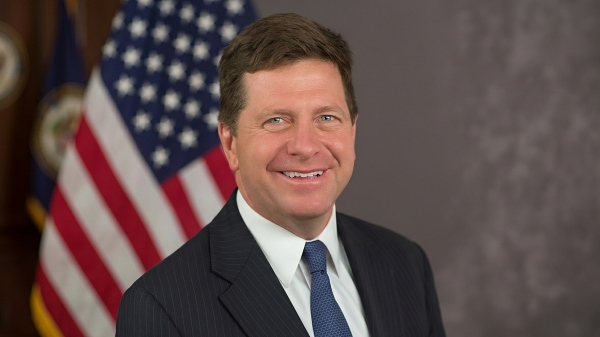
Jay Clayton (제이 클레이턴), a former chairman of the U.S. Securities and Exchange Commission who launched an unregistered securities lawsuit against Ripple Labs over XRP, has been nominated as a candidate for director of the U.S. Director of National Intelligence (DNI).
On June 11 local time, blockchain outlet U.Today reported that Clayton is drawing attention from the financial sector and the cryptocurrency industry as he could take the post overseeing coordination of 18 U.S. intelligence agencies.
Clayton is remembered as the figure who led the SEC during the Donald Trump administration and approved the opening of a major lawsuit against Ripple Labs. At the time, the SEC judged XRP to be an unregistered security, and the case became a symbolic dispute across the broader cryptocurrency industry. Because of this record, Clayton has been seen as a figure who draws mixed assessments in the financial industry and the crypto market.
The personnel move came after the White House previously ran into strong opposition in Congress when it sought to appoint housing official Bill Pulte, who lacks intelligence experience. The controversy over Pulte's appointment is reported to have delayed even the process of reauthorising core government oversight powers. The White House then shifted toward a candidate with a more traditional background, and Clayton was selected as a result.
Clayton has been serving as Manhattan U.S. attorney since April 2025. The current nomination is reported to have received a recommendation from U.S. Central Intelligence Agency Director John Ratcliffe. If confirmed as DNI director, Clayton would leave his current post, but it has not yet been decided who will succeed him as Manhattan U.S. attorney.
Reaction from inside and outside the market also came quickly. Mike Novogratz (마이크 노보그라츠), chief executive of Galaxy Digital, said right after Clayton's nomination, "Jay Clayton is a much better choice as the head of our intelligence agencies," adding, "It's good for the United States." As an influential figure in the crypto industry offered public support, some attention around Clayton appeared to shift in a different direction from his SEC tenure.
Still, the confirmation process is difficult to call smooth. The White House said it is envisioning a scaled-back role for the DNI under Clayton and plans to focus more narrowly on coordinating the 18 intelligence agencies. Debate over how far to set the operating scope and authority of the intelligence agencies could also remain an issue during Senate review.
In this situation, the nomination is being read in the crypto industry as a personnel move with strong symbolic weight. That is because a figure who was at the starting point of the long-running lawsuit over XRP has moved from financial regulation to become a candidate for a key post in the intelligence field. Whether he actually takes office depends on the outcome of Senate confirmation, and it is not yet confirmed whether Clayton would lead a "smaller intelligence office" as envisioned by the White House.
 Jinju Hong
hongjj@d-today.co.kr
Jinju Hong
hongjj@d-today.co.kr