
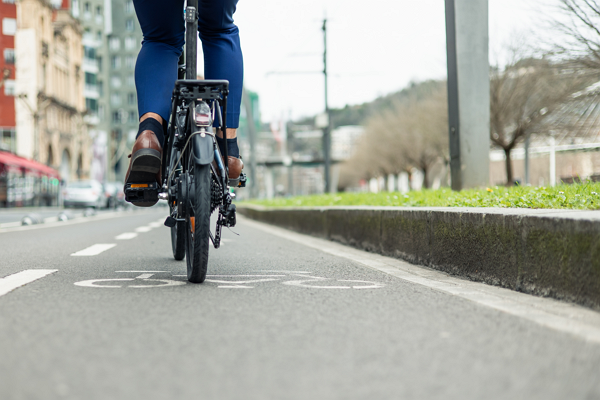
[DigitalToday reporter Jinju Hong (홍진주)] Electric bicycles are drawing attention as an alternative that reduces overall car maintenance costs, not just charging expenses. An analysis said replacing short car trips with an e-bike can cut not only fuel costs but also maintenance and parking costs, saving hundreds of dollars a year.
Electrek, an electric-vehicle publication, reported on June 3 local time that replacing 4,000 miles (about 6,400 km) of annual car travel with an e-bike could save about $900, or about 1.4 million won, in fuel and maintenance costs alone.
The analysis said consumers considering an e-bike often compare only charging costs with gasoline costs, which does not fully show the real economics. It said the real savings come from reduced maintenance expenses as the car is driven less.
The calculation is relatively simple. Assuming the U.S. average vehicle fuel economy of 25 miles per gallon and a gasoline price of $3.25 per gallon, driving 4,000 miles requires about 160 gallons of fuel. Annual fuel costs come to about $520. An e-bike, by contrast, uses about 20 to 30 watt-hours of electricity per mile. The power needed to travel 4,000 miles is about 100 kWh, and applying the U.S. average household electricity rate puts annual charging costs at about $17. That is a difference of more than $500 even when comparing only fuel costs.
Adding vehicle maintenance costs increases the savings further. According to estimates from the American Automobile Association (AAA), costs for maintenance and repairs, including tire replacements, add about 10 cents per mile. Cutting annual driving by 4,000 miles would save about $400 in maintenance costs. Combined with fuel savings, annual savings reach about $900.
In urban areas, savings on parking fees can also be expected. If a driver frequently uses paid parking lots, additional costs from hundreds of dollars to thousands of dollars can be reduced, which could increase the perceived savings.
The economics of e-bikes stand out more in their potential to replace a second car. In the United States, monthly payments for a new-car installment plan exceed $700, and insurance premiums add hundreds of dollars a month. Adding registration fees, maintenance, repairs and fuel costs means keeping a second vehicle could cost $8,000 to $12,000 a year. By contrast, an e-bike can generally be bought for $1,500 to $3,000, and charging costs are effectively negligible. The analysis also said some households can recoup the investment within 1 to 2 years by postponing or foregoing the purchase of a second car by using an e-bike.
An e-bike cannot, of course, replace all travel needs. There are limits in settings that involve frequent long commutes, areas with poor bicycle infrastructure, or environments requiring regular transport of large cargo. It is also difficult to fully replace the role of a car when several family members need to travel at the same time.
Even so, experts believe substantial benefits can be gained by switching only short daily trips to an e-bike. They said savings can accumulate quickly by replacing relatively short car trips such as nearby grocery runs, picking up delivered food, or commuting a few times a week.
Such short-distance driving often involves internal combustion vehicles running after a cold start, a segment with low fuel efficiency. Another analysis said the actual savings could feel larger than the calculated figures. It also cited benefits that are hard to convert into money, including time savings, parking convenience, more physical activity and reduced stress.
Electrek said e-bikes are not just a way to save on charging costs but an option that can reduce dependence on cars and change the structure of household spending itself. It also said that as the AI and electric-vehicle era gathers pace, e-bikes are also increasing their presence as a cost-effective personal mobility option.
 Jinju Hong
hongjj@d-today.co.kr
Jinju Hong
hongjj@d-today.co.kr