
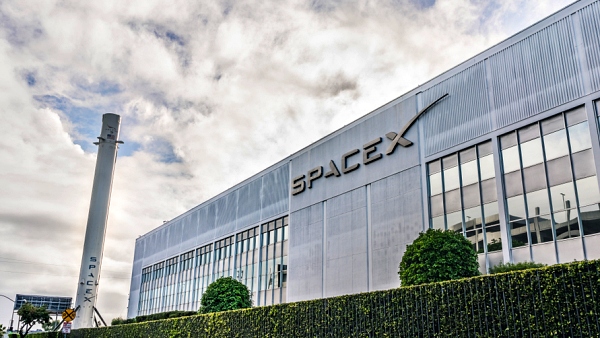
With SpaceX set to list on Nasdaq on June 12 (local time), arbitrage competition in the cryptocurrency market is intensifying over the price of SpaceX synthetic futures.
According to blockchain outlet BeInCrypto, the SPCX-USDC synthetic perpetual futures contract traded on Hyperliquid already reflects a SpaceX valuation of around $2 trillion.
The market focus is how quickly the synthetic product price converges to the actual share price after listing. SpaceX’s offering is targeting a $1.75 trillion valuation and $75 billion in fundraising. Hyperliquid’s SPCX-USDC contract started at a reference price of $150 on May 18 and rose to $216, then moved around $203. The funding rate has also remained positive at a high level since launch.
The market is seeing predictions that arbitrage players could sell synthetic futures and buy the actual stock as soon as the listing happens. One user pointed to the wide gap between Hyperliquid’s SPCX perpetual futures price of $216 and the expected Nasdaq IPO price of $525, saying, "That 60 percent gap is because the arbitrage structure is not working properly." The user added, "The CBRS (Cerebras Systems) case showed that price convergence can occur sharply during the final 72 hours before listing."
The expected convergence range is about 100 to 250 basis points, and most of the price adjustment is likely to appear within 6 hours after trading begins on June 12. In grey-market cases for Reddit and ServiceTitan, price readjustments also took place within 4 to 6 hours.
Exchange regulatory risk also remains. Synthetic pre-IPO products offered by Binance, OKX, Bitget, BingX and Hyperliquid have an unprecedented structure under U.S. securities law. If SpaceX lists, formal stock trading will begin, and the price discovery function and trading demand for these synthetic products could weaken. The U.S. Securities and Exchange Commission and the Commodity Futures Trading Commission have not yet launched a formal probe, but the market is predicting that if regulators scrutinise the product structure, smaller exchanges could face a bigger burden.
BingX and OKX are seen as having a smaller regulatory response capacity than Binance, while Hyperliquid is assessed as having limited direct exposure due to its on-chain structure. By contrast, SpaceX futures on crypto exchange BTCC and products at some mid-sized exchanges could lack the capacity to respond if regulatory review intensifies after listing. For this reason, the market is also discussing the possibility that at least one venue could restrict SPCX trading or delist it within the next 90 days.
SpaceX’s bitcoin holdings are another variable. SpaceX disclosed in its S-1 registration statement that it holds 18,712 bitcoin. Its acquisition cost was $661 million, and applying the current bitcoin price of $75,690 puts its valuation at about $1.42 billion. By holdings, it is ahead of Tesla, which holds about 11,509 bitcoin.
The market is taking this not as Elon Musk’s personal inclination but as a signal aimed at investment demand linked to bitcoin prices. In other words, SPCX buyers end up with passive bitcoin exposure whether they want it or not.
Amid these trends, the market is predicting that SpaceX’s IPO structure could also influence offering strategies for other large private companies. Anthropic’s private-market value is already being discussed as exceeding $1 trillion, and OpenAI is reported to be preparing listing documents based on a post-money valuation of $852 billion. With both companies having disclosed bitcoin holdings, a view was also presented that they could expect a premium of about 5 to 8 percent among crypto-linked investors.
The upcoming schedule is also tight. SpaceX is set to begin its investor roadshow on June 4, set the offering price on June 11 and start first trading on June 12. The first hour of SPCX moves on listing day is seen as the key window that will determine whether arbitrage works. If price convergence occurs within 6 hours, the crypto market’s pre-listing synthetic product experiment could gain traction, but if a large price gap remains or regulatory action targets exchanges, the market structure itself could be shaken.
The market is viewing this listing as the first major test of the effectiveness of crypto-based pre-IPO synthetic products. If SPCX prices converge quickly to the actual share price, the price discovery function of pre-listing products could be highlighted, but if the gap persists or regulatory risks materialise, trust in the related market could be shaken. With SpaceX’s bitcoin holdings also added as a variable, post-listing share-price moves and SPCX flows are expected to be major points of interest in the crypto market as well.
 Yoonseo Lee
yslee@d-today.co.kr
Yoonseo Lee
yslee@d-today.co.kr