
Audi is moving away from its previous development strategy focused on global common models and is strengthening tailored vehicle strategies for key markets such as the United States and China. It aims to maintain its brand identity, but adjust vehicle planning and production systems to meet regional demand.
According to IT outlet Ars Technica on May 26 local time, Audi CEO Gernot Doellner (게르노트 될너) said the company is keeping its global brand strategy but shifting vehicle development to prioritize regional consumer requirements.
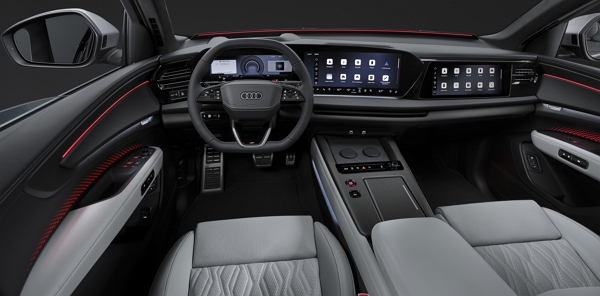
The new Q9 was presented as a representative example of the strategy shift. Doellner described the Q9 as “a vehicle aimed exclusively at the U.S. market for the first time.” He said it would not follow the approach of launching first in Europe and then bringing it to the United States, adding that the U.S. market would come first and a global launch would follow.
U.S. consumer preferences were also actively reflected in the vehicle’s configuration. Audi applied cupholders that can accommodate large tumblers. It also reinstated separate physical switches instead of the smart door panels introduced in the existing A5, A6 and Q5. Cooling performance, seats and roof design were also adjusted to meet U.S. customer demands.
Audi sees the U.S. and European markets as able to share a significant number of models, but judged that China needs a completely different approach. “China needs more of a ‘Local for Local’ strategy,” Doellner said, adding that production, supply chains and even the ecosystem should be reorganised around the China market.
After recently visiting the Beijing motor show, he said he felt that “the era of global products is over.” He said it is difficult to compete in China with only export-oriented models, meaning a tailored strategy combined with local technology and production systems is essential.
The change also aligns with a broader trend across the auto industry. After the COVID-19 pandemic, as supply-chain restructuring and geopolitical conflicts intensified, global automakers have been moving to strengthen regional production and development systems rather than pursuing common-model strategies based on a single platform.
Audi also hinted at the possibility of expanding high-performance models. Doellner said the combination of a large SUV and a V8 engine “fits very well,” and he mentioned the possibility of technology sharing within the Volkswagen Group, including Lamborghini’s Temerario V8. He did not give a specific answer on whether the next-generation Audi R8 will be relaunched.
He also left open the possibility of expanding the wagon lineup in the U.S. market. While Audi’s U.S. sales are currently centered on sedans and SUVs, Doellner said high-performance wagons in the RS and allroad lines could suit U.S. consumer tastes. He added that dealers have been continuously requesting the introduction of RS wagons.
The industry is interpreting the remarks as a signal not simply of a change in model strategy but of a plan to redesign production and supply-chain structures by region. As a result, Audi’s future new-car strategy is increasingly likely to move away from a Europe-centered common-model approach toward U.S.-first development, stronger localisation in China and then global expansion.
 Jinju Hong
hongjj@d-today.co.kr
Jinju Hong
hongjj@d-today.co.kr