
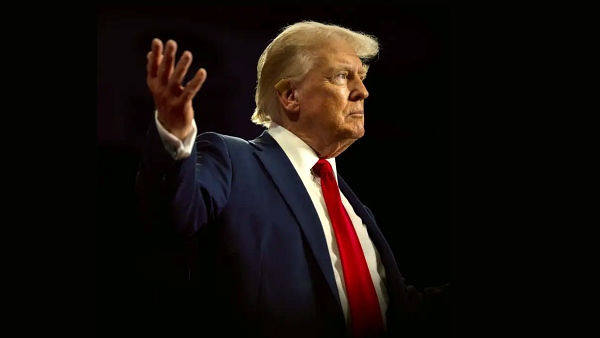
U.S. President Donald Trump publicly backed maintaining the Commodity Futures Trading Commission's exclusive regulatory authority over prediction markets.
On May 27, blockchain media outlet Coinpost reported that Trump said on the social media platform Truth Social that it is essential for the CFTC to continue to exclusively regulate prediction markets.
Trump described the United States as the "world capital" of cryptocurrencies, including bitcoin, and also set out a stance of protecting the related industry. He said other countries are moving to take that position but he will not let them, and described crypto as a "major industry" as he reiterated that protection would continue at the federal level.
The remarks came as jurisdictional clashes between the federal government and state governments over prediction markets have spilled into litigation. The issue is whether prediction market products are financial products or subject to each state's gambling regulation. Operators including Polymarket, Kalshi and Coinbase have maintained that their services are financial products and therefore not subject to state-by-state gambling laws.
Trump in particular praised CFTC Chairman Michael Selig, saying he is "doing work that anyone would acknowledge." By contrast, Trump strongly opposed moves by several states, including New York, to regulate prediction markets independently.
The CFTC has in fact stepped up its legal response against state governments this year. On April 2 it sued three states — Illinois, Arizona and Connecticut — in federal district court, and on April 24 it also filed a complaint in the U.S. District Court for the Southern District of New York. The CFTC asked the courts to confirm that federal law grants it exclusive authority over event contracts in prediction markets and to block states from applying state law to CFTC-registered operators.
Selig also directly criticised New York state's response. He said New York is seeking to apply its gambling laws to CFTC-registered exchanges and that it has joined a trend among other states that "ignores federal law and decades of case law." The CFTC says it will block state regulatory intervention based on the U.S. Constitution's principle of federal law supremacy.
State governments have also moved to respond jointly. On April 24, New York Attorney General Letitia James submitted a brief to the Massachusetts Supreme Judicial Court supporting a lawsuit Massachusetts brought against Kalshi, along with attorneys general from 37 other states. In the brief, the states argued that sports-related betting offered by prediction markets should follow state gambling laws and asked the court not to accept Kalshi's argument that the CFTC should regulate prediction markets exclusively.
States view gambling regulation as aimed at consumer protection, preventing minors' exposure to gambling and securing tax revenue. They argue that the CFTC's supervisory framework does not adequately address risks inherent to gambling. As a result, the dispute is moving beyond a simple fight over oversight authority to the question of how to classify prediction market services legally.
In this situation, Trump's remarks are seen as making the direction of federal-level regulation clear again. That is because he delivered a message at the same time of concentrating jurisdiction over prediction markets in the CFTC and continuing to protect the crypto industry as a U.S. strategic industry. Depending on future court rulings, the operating scope of prediction market operators, states' regulatory authority and the boundaries of the federal supervisory framework are expected to be clarified.
 Yoonseo Lee
yslee@d-today.co.kr
Yoonseo Lee
yslee@d-today.co.kr