
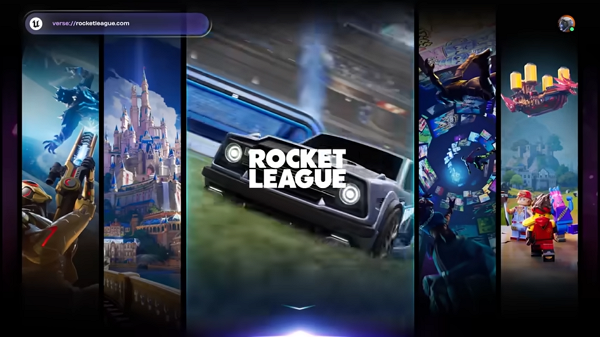
[DigitalToday intern reporter Kyung-min Hong (홍경민)] Epic Games unveiled Unreal Engine 6, which it called the culmination of its next-generation AI and graphics technology, for the first time worldwide. It also declared a sweeping generational overhaul of the popular game Rocket League.
On May 25 (local time), IT outlet Engadget reported that Epic Games showed a surprise teaser trailer for Rocket League, which is being fully redesigned on a next-generation engine, at the Rocket League Paris Major event venue.
The announcement is being seen as highly unusual because Rocket League, not Fortnite, Epic Games' flagship title, was put forward as the first showcase. It is drawing intense attention among gamers and developers worldwide.
The strong on-site reaction came because every gameplay scene in the video was captured in real time from actual console and PC environments, without editing or pre-rendering. Epic Games did not specify detailed technical specifications for Unreal Engine 6. Still, the video’s visual advances, including finely detailed vehicle textures and realistic light reflection and refraction effects, were enough to demonstrate the next-generation engine’s powerful performance.
The unveiling of real in-game footage running live marked the first time the industry has confirmed the reality of the next-generation engine, which had been the subject of widespread rumours. It was also a tangible result achieved years after Epic Games CEO Tim Sweeney (팀 스위니) previously alluded to the development team's work to switch to a new engine.
The engine change is particularly significant because it represents a leap that rapidly evolves Rocket League into a cutting-edge environment after it ran on a previous-generation engine since launch and hit technical limits.
Even so, it is expected to take some time before a finished product that could shake up development environments worldwide reaches the market. Epic Games did not finalise an official release schedule for Unreal Engine 6 or a detailed distribution timeline for the Rocket League overhaul at the event.
Still, with more than 4 years having passed since Unreal Engine 5 was released to the global market, industry experts expect this teaser to serve as a catalyst for quickly reshaping game production paradigms worldwide around the next-generation engine.
In the end, the announcement is expected to go beyond a simple graphics upgrade for a single game and become a signal that raises the technological benchmark for next-generation hardware and the broader virtual ecosystem. In particular, with Epic Games showcasing a distinct technology gap by using the unexpected card of Rocket League instead of Fortnite, high-end graphics innovation and competition to secure platforms across the global games industry are expected to intensify further.
 Kyung-min Hong
hongm@d-today.co.kr
Kyung-min Hong
hongm@d-today.co.kr