
[DigitalToday intern reporter Seung-ah Yoo] Hyundai Motor is making a full rollout of range-extended electric vehicles (EREVs) in the U.S. market.
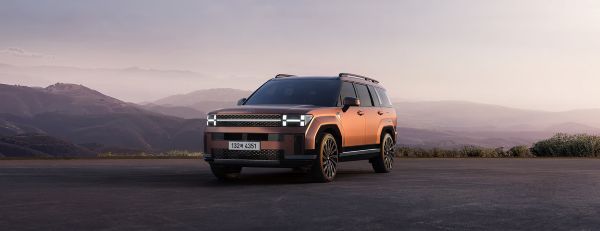
On Aug. 30 (local time), EV outlet Cleantechnica reported that Hyundai Motor plans to expand its range-extended EV lineup in the United States starting with the three-row Santa Fe SUV.
A range-extended EV runs on battery power. Its gasoline engine does not drive the vehicle directly and instead only turns a generator to charge the battery. That differs from a typical plug-in hybrid (PHEV), where the engine can drive the wheels directly.
The trend is also intertwined with regulatory changes in China. China’s regulators recently excluded plug-in hybrids that cannot travel more than 100 km (about 62 miles) on battery power alone from new-energy vehicle (NEV) incentives. That threshold is based on China’s more lenient measurement method, and when converted to U.S. Environmental Protection Agency (EPA) standards it is typically about 20 percent lower, or around 50 miles (about 80 km). That is similar to the driving range of the Chevrolet Volt, often cited as the first range-extended EV, 10 years ago. After the regulatory change, BYD released a model that can travel up to 1,300 km using both electricity and fuel.
Hyundai Motor’s luxury brand Genesis is also included in the strategy. Genesis recently announced the GV80 hybrid, but the midsize GV70 has been cited as the model most likely to get the range-extended EV first. It has not been confirmed whether the Santa Fe range-extended EV and the GV70 range-extended EV will use the same powertrain. A Genesis model is reported to have a combined range of 640 miles (about 1,030 km), slightly longer than the Santa Fe.
Production plans are also being centered on the United States. The Santa Fe range-extended EV is expected to be produced in the United States, with the Alabama assembly line that builds existing gasoline and conventional hybrid models seen as the leading candidate. The GV70 is currently produced in Ulsan, South Korea.
The decision also ties into Hyundai Motor’s broader U.S. electrification strategy. Hyundai Motor set a goal of adding 10 new hybrid models in the United States by 2030 and having them account for half of total sales. It also plans to increase North American production capacity by an additional 500,000 units by 2030.
Rivals are moving in a similar direction. Stellantis plans to apply range-extended EV powertrains from the Jeep Grand Wagoneer to the Ram 1500 range-extended EV pickup. Ford is reported to be developing a range-extended EV truck to replace the discontinued F-150 Lightning. Volkswagen’s new business unit Scout is also considering range-extended EVs for the Traveler SUV and the Terra pickup and said pre-orders are "leaning heavily toward the plug-in option."
Hyundai Motor is also broadening its North American lineup alongside the range-extended EV push. It is reported to be developing a pickup truck and a body-on-frame SUV, including the Bolder concept unveiled at this year’s New York Auto Show. As the Ford Bronco delivers sales results, other automakers are also seeking to enter the market, it said.
Ultimately, Hyundai Motor’s expansion of range-extended EVs is seen as a choice aimed at demand between pure EVs and conventional hybrids. In the U.S. market, where charging infrastructure and concerns over long-distance driving remain, the company is accelerating a strategy to broaden its electrification portfolio with the Santa Fe and Genesis.
 Seung-ah Yoo
ysah@d-today.co.kr
Seung-ah Yoo
ysah@d-today.co.kr