
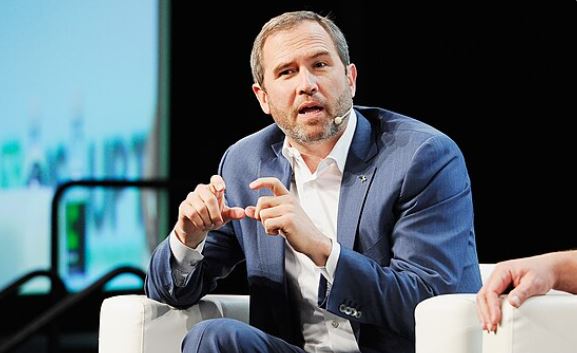
Brad Garlinghouse (브래드 갈링하우스), Ripple’s chief executive officer, pushed back against some market views that the company is moving away from XRP.
A blockchain media outlet, The Crypto Basic, reported on May 9 that Garlinghouse said at the XRPL Las Vegas event that Ripple still holds the most XRP globally and wants XRP to succeed more than anyone.
Garlinghouse called it “ridiculous and strange” that some continue to doubt Ripple’s commitment to XRP. “Ripple is still the biggest holder of XRP on this planet,” he said. “We are the party that most wants XRP to succeed.” It was seen as a public rebuttal to concerns that Ripple’s expansion into stablecoins and treasury could mean it is putting more weight on other areas than XRP.
Ripple said its strategy is focused on raising XRP’s utility, liquidity and trust in the financial sector. Garlinghouse said the company is selling services and products to global financial institutions and capital markets while continuing to look for ways to make XRP the “most useful digital asset.”
He also drew a line against concerns that the stablecoin business could replace XRP in the long term. Garlinghouse said some business decisions may not appear to be directly linked to XRP in the short term, but ultimately support the ecosystem indirectly. He added that not every business decision is a straight path “from A to B,” but stressed that the long-term goal is to expand XRP’s liquidity, adoption and trust.
Ripple is also accelerating the expansion of its corporate treasury business, Ripple Treasury. Garlinghouse said Ripple ran advertising for XRP and Ripple Treasury across the Las Vegas Strip. The move coincided with a time when rival Kyriba was holding a customer event nearby. He said Ripple also deployed buses wrapped with Ripple Treasury ads as transportation for attendees going to the rival event venue.
He said the company’s scale has also grown. Garlinghouse said Ripple has about 1,500 employees. He described 2026 as a record year for the company across multiple areas, but did not cite specific performance figures.
Garlinghouse also mentioned the XRP Ledger Foundation outside Ripple and the potential to expand the XRP Ledger ecosystem. He said many future blockchain use cases could develop independently of Ripple in areas such as tokenisation and bond settlement. He said David Schwartz (데이비드 슈워츠), former Ripple chief technology officer, and early XRP Ledger developers designed an early decentralised exchange structure with built-in tokenisation functionality from more than 10 years ago.
As an example of inefficiency in traditional finance, he pointed to bond settlement. Garlinghouse said bond settlement systems remain old and inefficient, and that on-chain conversion in such areas will become increasingly inevitable over time. He said he does not expect the future of the blockchain industry to converge on a single chain. He said a “multi-chain” environment is more likely, adding that while the XRP Ledger has areas of strength, there may be areas better suited to other blockchains.
Ripple said it is open to accelerating real-world blockchain adoption in areas where the XRP Ledger can deliver value. The remarks were seen as reaffirming that, even as Ripple expands stablecoin and enterprise businesses, its long-term axis remains strengthening the XRP ecosystem.
 Yoonseo Lee
yslee@d-today.co.kr
Yoonseo Lee
yslee@d-today.co.kr