
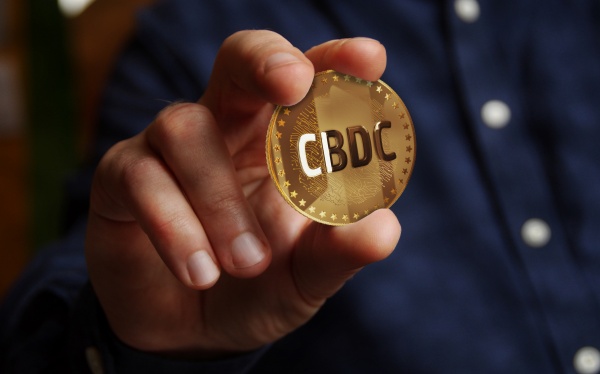
Tokenised assets, stablecoins and central bank digital currencies (CBDCs) are expected to move beyond the testing stage and become core infrastructure for payments and capital markets by 2030, a forecast said. It also warned the process could significantly shake up traditional banks' revenue structures and strategies for customer touchpoints.
Fintech outlet Fintech News Switzerland reported on May 4 that IBM released a report laying out scenarios for a shift to a digital asset-based financial system, based on a survey of 500 global financial services executives and industry analysis.
IBM presented 3 scenarios that could change banking by 2030. The first is a scenario in which CBDCs replace existing retail payment systems. If CBDCs spread, governments and central banks would be able to tighten control over money flows and pay subsidies more quickly. Users could also expect lower payment fees.
But it could be a burden for banks. If card networks and account-based payments are pushed out, interchange fees, deposit-based interest income and control over transaction data could weaken. About one-third of surveyed executives said it was highly likely CBDCs would replace existing card payment networks.
The second scenario is privately issued stablecoins becoming the mainstream for cross-border payments. IBM forecast that stablecoins backed by fiat currency or government bonds could become a key tool for cross-border payments. It said instant settlement, programmable finance functions and liquidity-optimised structures could change corporate payment environments.
The analysis also said a situation in which large companies issue their own stablecoins could become a reality. Some 42 percent of respondents rated that possibility as high. In that case, banks could see deposit-based and transaction fee revenue decline, while their customer data touchpoints could also weaken.
IBM proposed tokenised deposits and tokenisation of internal operating systems as countermeasures. It said banks could take on roles including custody of digital assets, liquidity management and acting as a bridge connecting different stablecoin ecosystems.
The third scenario is tokenised securities shaking existing capital market infrastructure. IBM said if tokenised securities handle issuance, trading and settlement directly on blockchain, structures centred on exchanges, clearing houses and custodians could be disrupted. It said the advantages of real-time trading, automated regulatory compliance and fractional investing could come into focus, sharply lowering the cost of existing financial infrastructure.
Risks also exist. Wallets and smart contracts could become targets of cyberattacks, and regulators would face the task of rebuilding market surveillance and regulatory systems in a decentralised network environment.
The market has already made tokenisation a strategic task, but there is also an assessment that the pace of actual execution remains limited. Of those surveyed, 26 percent said tokenisation was a core strategy, but only 9 percent said they were operating services or had completed preparations for deployment. A shortage of relevant talent was also cited as a major obstacle.
IBM forecast 2026 as a turning point for the tokenisation shift. It cited the simultaneous progress of regulatory improvements in each country, the maturation of blockchain technology and the transition of pilot projects to commercialisation. The report cited discussions on U.S. stablecoin regulation legislation, Singapore's Project Guardian, China's e-CNY and Cambodia's Bakong system as representative cases.
Forecasts for market size differed by institution. Boston Consulting Group and ADDX estimated tokenised assets could be worth up to 16 trillion dollars in 2030. McKinsey, however, took a more conservative view, forecasting the total tokenisation market excluding cryptocurrencies at 2 trillion to 4 trillion dollars.
In the end, there is an assessment that the spread of tokenisation and digital assets is moving beyond a simple technical experiment to a stage of redesigning banks' roles, payment structures and capital market infrastructure itself.
 Jinju Hong
hongjj@d-today.co.kr
Jinju Hong
hongjj@d-today.co.kr