
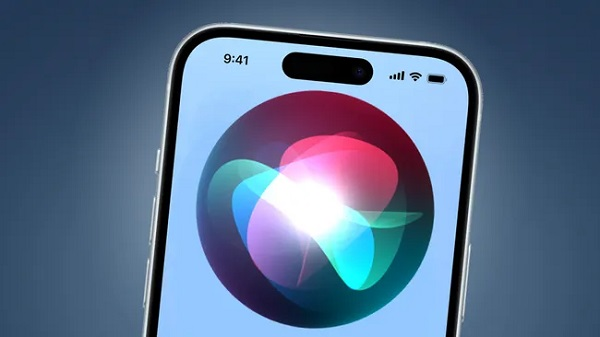
Apple's voice assistant Siri has faced criticism as its AI transition has been delayed, but it is seeking a turnaround through a major organisational overhaul along with the use of external AI models.
IT media outlet 9to5Mac reported on Jan. 5 that the delay in Siri's AI update stems from Apple's cautious development stance and privacy protection strategy.
Apple has prioritised completeness over being first to market. Given Siri's nature as a voice-first interface, it has viewed a rushed adoption of large language models (LLMs) as risky. It has also made it harder to advance Siri because Apple has a policy of not using user data for training, even though LLM training requires large-scale user data.
Over time, the situation changed. While improvements to Siri's intelligence were delayed for an extended period, rival AI such as OpenAI's ChatGPT and Google's Gemini developed rapidly. Apple already offers a feature that automatically switches to ChatGPT when Siri cannot respond, and a plan to use Gemini in Siri's backend has recently been mentioned. The explanation is that even if an external model is used, it would run on Apple's Private Cloud Compute (PCC) servers, protecting user privacy.
A full-scale change to Siri is expected to come with iOS 26.4. Through the update, Siri is expected to drop its existing structure and shift to an LLM-based architecture, enabling chatbot-level conversational responses. Features that had been postponed are also expected to be introduced, including hands-free controls via app intents, personal context recognition and screen recognition.
The industry is assessing that, rather than clinging to developing its own AI model, a strategy of combining proven external AI models with Apple's strength in privacy protection could be a realistic breakthrough for Siri. It is also being analysed that Siri's future success will depend less on a competition in proprietary technology and more on how quickly and stably Apple can provide an AI experience.
 Kyungmin Hong
hongm@d-today.co.kr
Kyungmin Hong
hongm@d-today.co.kr