
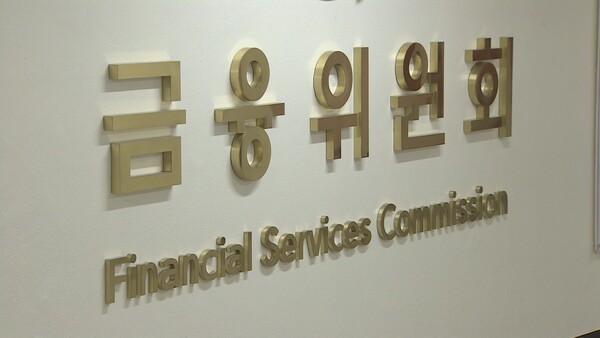
South Korea's Financial Services Commission is pushing ahead with a system overhaul to expand lending to mid-credit borrowers. The move aims to lower interest rates and increase supply as an economic slowdown increases the burden on vulnerable borrowers.
The FSC on Sunday held the fourth meeting of its "Inclusive Finance Great Transformation" in Seoul to discuss measures to promote mid-interest loans.
FSC Chairman Lee Eok-won (이억원) said the "waist" tier of mid-credit borrowers is important to maintaining stability in the economic structure. He said a worsening economic environment has recently led to a trend of rising financial burdens for them. He added the FSC will pursue institutional improvements to expand the supply of mid-interest loans at lower rates.
The FSC will first adjust supply standards for the policy-backed Saitdol loan. It will change supply requirements to "supply at least 70 percent to the bottom 20 to 50 percent by credit," strengthening a supply structure centered on mid-credit borrowers. As a result, Seoul Guarantee Insurance's insurance rates are expected to fall by up to 5.2 percentage points, and the supply volume is projected to increase by about 100 billion won.
Support for low-credit borrowers will be strengthened separately through policy microfinance. The supply scale for policy microfinance this year was set at 12 trillion won, and the interest rate for Haetsal loans will be lowered to 12.5 percent from 15.9 percent.
A dedicated Saitdol loan for sole proprietors will also be introduced. The product will raise its limit to 30 million won from 20 million won and is set to be supplied at up to 150 billion won within the year.
Credit-specialised financial companies, including card companies and capital companies, will also be allowed to handle Saitdol loans. This is expected to enable up to 500 billion won in additional annual supply.
The FSC will also revise the private mid-interest loan system. It plans to reflect changes in loan costs in the method used to calculate interest-rate requirements and adjust some cost items, lowering interest-rate benchmarks by up to 1.25 percentage points by sector.
The meeting also shared the financial sector's plans to implement inclusive finance. KB Financial said it plans to supply a total of 17 trillion won by 2030 through its "National Happiness Hope Project," and to allocate 10.5 trillion won of that to support low-income and vulnerable groups.
Experts assessed the measures as an opportunity to improve mid-credit borrowers' access to finance and expand the role of private finance. They also pointed to the need to simultaneously strengthen credit assessment capabilities and overhaul incentive systems.
Nam Jae-hyun (남재현), a professor at Kookmin University, said the FSC measures are significant in that they will improve mid-credit borrowers' access to finance and expand the role of the private financial market. He said it is necessary to build up financial institutions' credit assessment capabilities, actively supply private mid-interest loans and strengthen authority and responsibility for it, and establish compensation and incentive systems for strong financial institutions.
Lee said mid-interest loans are an important tool for private financial companies to supply funds to low-income groups at reasonable rates. He said the public purse and the private sector will cooperate to implement inclusive finance covering low-credit and mid-credit borrowers.
 Ji-young Lee
ljy@d-today.co.kr
Ji-young Lee
ljy@d-today.co.kr