
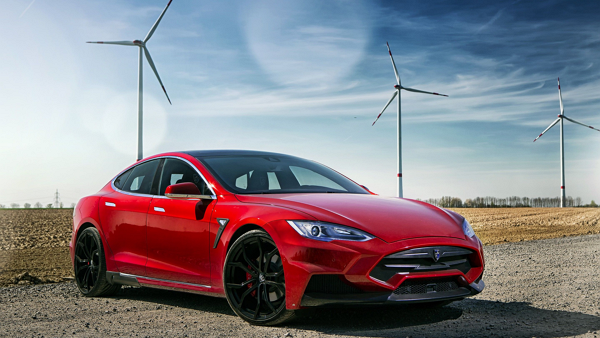
[Digital Today reporter Jinju Hong (홍진주)] Tesla has entered the process of effectively wrapping up production of the Model S, its flagship electric sedan that has run for 14 years. It is being described as more than a discontinued model, but the exit of a symbolic vehicle that opened the era of electric cars.
InsideEVs, an electric-vehicle publication, reported on April 25 that the Model S is seen not simply as a luxury electric sedan but as a vehicle that changed consumer expectations for electric cars and the broader auto market.
The Model S made its impact clear from the start. The early model introduced in 2012 carried an 85 kWh battery and offered an estimated range of up to 265 miles, or about 426 km, under U.S. Environmental Protection Agency standards. Compared with the Honda Fit EV at 123 miles and the Nissan Leaf at 73 miles, it was seen as an overwhelming leap that first demonstrated EVs could be long-distance transport rather than just an urban auxiliary option.
Charging infrastructure at the time did not keep up. As of early 2012, the United States had several thousand chargers installed, but most were close to slow charging, making lengthy charging unavoidable for long-distance driving. Early users at times faced the inconvenience of having to contact multiple places in advance to find accommodations where they could charge.
The Model S sold today keeps the basic outline of its exterior, but its internal components have effectively been completely changed. The battery, electronics, drivetrain, interior and safety equipment have all been comprehensively improved, and performance has risen sharply. Tesla chose a method of developing the same model over a long period through continuous upgrades rather than a traditional generational change.
Manufacturing methods also changed significantly in the process. The number of parts fell from about 5,000 in the early versions to about 3,000 in the latest model, and the share of elements common to the early and latest models is said to be only about 3 percent. It has kept the same name but evolved into what is effectively a completely different vehicle.
The Model S's influence spread across the industry. Flush door handles, large touchscreens and over-the-air software updates, or OTA, later became standards across the global auto industry. It is especially seen as proving that EVs can be mainline vehicles with performance and appeal, not just regulatory compliance products.
There were also limits, including controversy over the early model's level of completion and quality issues. Even so, the Model S is cited as a decisive catalyst that raised consumer expectations not only for EVs but for all new cars.
This discontinuation is being interpreted not simply as a lineup adjustment but also as a sign of a change in Tesla's strategy. Software-centric vehicle development and continuous updates that began with the Model S have already spread to other models and across the industry.
The Model S may disappear into history, but the EV innovation and changes to the auto industry that it set off are still seen as ongoing.
 Jinju Hong
hongjj@d-today.co.kr
Jinju Hong
hongjj@d-today.co.kr