
South Korea's stock market has surged since the start of the new year. The KOSPI broke above 4,400 in just 2 trading sessions. Riding the momentum, the government has signalled sweeping tax benefits including a new Individual Savings Account (ISA), a return-to-domestic-market account (RIA) for overseas investment funds and separate taxation for high-dividend companies. Attention is on whether this can bring forward a KOSPI 5,000 era.
On Jan. 5, the KOSPI closed up 3.43 percent at 4,457.52. The Kosdaq ended up 1.26 percent at 957.50. It was the first time the KOSPI has topped 4,400. The Kosdaq marked its highest level in about 4 years since Jan. 20, 2022 (958.7).
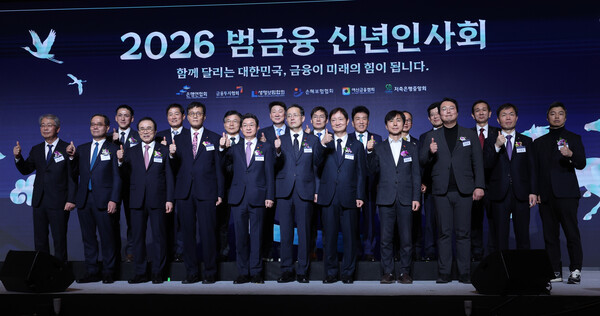
The government plans to bring forward a KOSPI 5,000 era through strong tax incentives. At the "2026 Pan-Finance New Year Gathering" held at the Lotte Hotel in Jung-gu, Seoul on the same day, Deputy Prime Minister Koo Yun-cheol, who also serves as minister of the Ministry of Finance and Economy, said, "We will significantly strengthen tax benefits for long-term investment in domestic stocks and will also work to establish fair market order, including eradicating stock price manipulation." He reiterated the will to implement the "2026 economic growth strategy" announced on Jan. 2, and the market is taking it as easing policy uncertainty and a strong signal.
The part individual investors are most looking forward to is the introduction of a new ISA tailored to domestic investment. According to the industry, the government is expected to announce soon the launch of a product with much stronger tax benefits than existing ISAs.
Under the current ISA, up to 2 million won (4 million won for low-income plans) is tax-exempt for the standard plan, while gains above that are taxed separately at 9 percent. The government is reportedly considering raising the tax-free limit for the new ISA to 5 million won, or even eliminating the tax-free cap entirely within the contribution limit.
In particular, the new ISA will be linked to the government-backed "People's Growth Fund" and a business development company (BDC). A "double incentive" structure is seen as likely, applying not only income and tax-credit deductions on contributions but also low-rate separate taxation of 5 to 9 percent on dividend income generated when investing in these policy funds. A plan to keep tax benefits when ISA maturity funds are transferred to pension accounts (IRP and private pensions) will also be pursued.
This is expected to contribute significantly to domestic market investment, in addition to the return-to-domestic-market account (RIA) system designed to bring back individual investors who moved assets overseas last month. RIA accounts greatly expand capital gains tax relief when investors sell overseas stocks and reinvest in domestic stocks.
If an investor sells overseas stocks through an RIA account and invests in domestic stocks for at least 1 year, the investor can receive capital gains tax relief on gains generated within a limit of 50 million won per person in sale proceeds, after a 2.5 million won deduction. The relief rate varies depending on when funds are brought back. It is 100 percent if funds return within the first quarter, 80 percent in the second quarter and 50 percent in the second half.
The government also decided, as part of its corporate value-raising programme, to apply low-rate separate taxation to shareholders of companies that expand shareholder returns, instead of comprehensive taxation on financial income.
Eligible companies are those whose dividend amount does not decline compared with the base year (2024) and that either have a dividend payout ratio of at least 40 percent or have a payout ratio of at least 25 percent while increasing dividends by at least 10 percent from the previous year. Shareholders receiving the benefit will be taxed separately on dividend income, without adding it to other comprehensive income.
Tax rates apply a progressive structure ranging from 14 to 30 percent depending on income bracket. It is 14 percent for 20 million won or less, 20 percent for more than 20 million won to 300 million won or less, 25 percent for more than 300 million won to 5 billion won or less, and 30 percent on amounts over 5 billion won. Even top investors whose dividends exceed 5 billion won face a much lower tax burden than the top tax rate on financial income of 45 percent, excluding local taxes, raising the attractiveness of dividend stocks by one notch.
Separately, institutional adjustments to secure tax revenue and improve tax fairness will also be pursued. With the introduction of the financial investment income tax deferred, the securities transaction tax rate will be restored to its 2023 level. As a result, the transaction tax rate will rise by 0.05 percentage points to 0.05 percent in the KOSPI market and to 0.20 percent in the Kosdaq.
Shinhan Investment Corp research fellow Donggil Noh said, "This year Korea will enter a new world it has never been to," and said, "Capital market revitalisation policies in which taxation, supply-demand and systems are intertwined will strongly support a bull market."
 Sangyeop Oh
yub@d-today.co.kr
Sangyeop Oh
yub@d-today.co.kr