
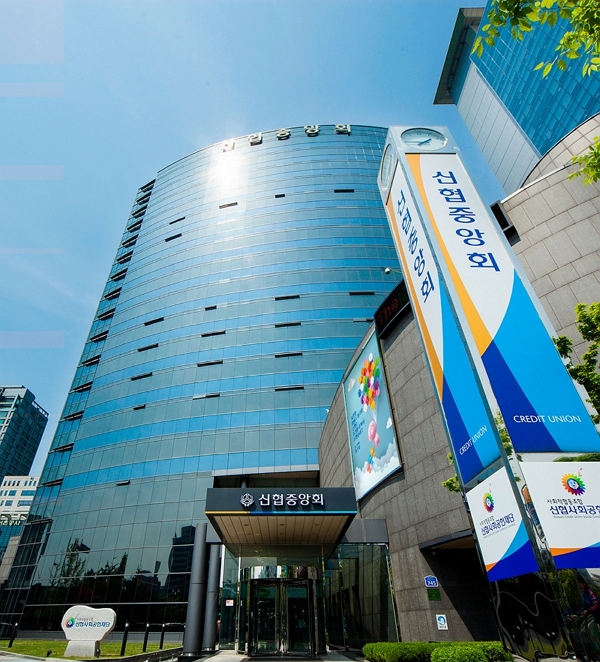
The Korea Federation of Credit Cooperatives will choose a new chairman on Jan. 7, as it faces a sweeping crisis marked by a sharp rise in delinquencies and a large net loss.
The National Election Commission said 5 people are running in the election for the federation’s 34th chairman on Jan. 7: Young-cheol Ko, chairman of Gwangju Culture Credit Union; Jong-sik Park, chairman of Samik Credit Union; Jae-yong Song, chairman of Nam Cheongju Credit Union; Jun-mo Yang, a board member of the federation; and Eui-su Yoon, a former external cooperation director at the federation.
It is the first time since direct elections were introduced that multiple candidates are competing. With previous elections closer to a vote on whether the incumbent would serve another term, this election is effectively the first direct contest, increasing the burden on member credit union chairmen who must decide.
The next chairman faces a tough reality. The Financial Supervisory Service said the credit unions’ total assets rose to 156.8 trillion won as of the end of the first half of last year, but liabilities grew faster. Total liabilities increased to 147.4 trillion won over the same period.
The net loss for the first half totaled 333.3 billion won. The delinquency rate jumped to 8.36 percent, and the ratio of substandard or worse loans also rose to 8.53 percent, flashing a warning sign for asset quality. The results of the latest parliamentary audit also revealed that 61 financial incidents occurred over the 5 years from 2020 through last year.
The deterioration in soundness stems from prolonged high interest rates and a slowdown in the property market. As bad loans tied to property project financing and self-employed borrowers have accumulated, especially at smaller credit unions, questions have continued over the federation’s risk management capabilities and support functions. The next chairman must act not only as a symbolic figurehead but also as a crisis manager.
Perhaps for that reason, the candidates’ pledges broadly focus on restoring soundness.
Ko, born in 1959, currently serves as a board member of the federation. His pledge to establish a new internet-only bank, CU Bank, stands out. He aims to create a new financial platform to compete with KakaoBank and Toss Bank. He also said he plans to set up a fund to guarantee low-income people and promote unsecured loans.
He also pledged to create an integrated credit union membership points program, introduce AI agents by job area, and develop a credit union welfare town including convalescent hospitals, senior towns and various welfare and medical services to generate new revenue sources.
Park, born in 1958, is a board member of the federation. He is seen as strong in the Daegu and North Gyeongsang region. He plans to overhaul internal systems by setting up a dedicated organization to respond to non-face-to-face transactions and building an AI-based management evaluation system. He put cleanup of bad loans and stronger risk management at the center of his platform.
Song, born in 1963, wants to redefine the federation’s role around “support and coordination.” He said he would ease burdens at the local level by setting up a dedicated crisis response team, strengthening communication with individual credit unions and expanding sales of non-performing loans.
Yoon, born in 1964, previously served as head of the federation’s external cooperation division and as an external cooperation director. He aims to restore the earnings base by strengthening support for loan sales. He also stressed expanding future growth engines by leaving open the possibility of pursuing an internet-only bank business and issuing a stablecoin, on the premise of legal and institutional improvements.
Yang, born in 1962, presented the establishment of a credit union bank as his core pledge. He also stressed strengthening competitiveness through AI adoption and digital innovation. He plans to build an AI and big data-based integrated response system to financial fraud to boost trust in credit unions.
Overall, the candidates have presented short-term measures such as cleaning up bad assets alongside mid- to long-term plans to secure competitiveness. Some have also floated more aggressive future strategies such as setting up an internet-only bank or issuing a stablecoin.
With the federation in crisis, market attention is focused on who will become its new leader.
The election for the 34th chairman will be held at 1:30 p.m. on Jan. 7 at the federation’s training center in Daejeon. A total of 862 chairmen of credit union member boards nationwide are expected to vote.
A financial industry official said, “Based only on the delinquency rate and the scale of losses, the federation is in a situation where it urgently needs to improve its fundamentals.” The official added, “The key evaluation criterion for the next chairman may be crisis management leadership that can adjust interests among credit unions while persuading regulators and the market.”
 Lee Ji-young
ljy@d-today.co.kr
Lee Ji-young
ljy@d-today.co.kr