
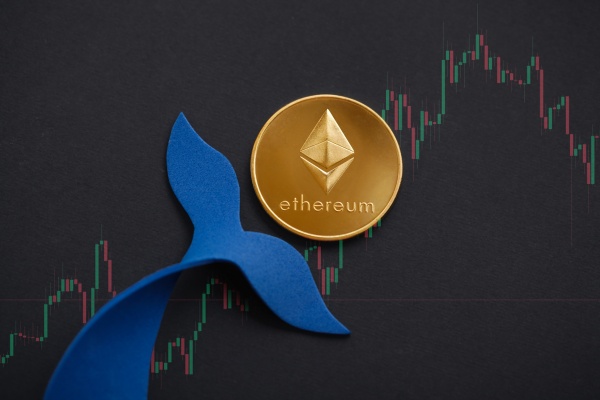
Ethereum futures open interest has fallen by $2 billion over the past week, rapidly shrinking leverage in the derivatives market.
On April 21, local time, blockchain media outlet Cryptopolitan reported that while Ethereum has held the $2,300 level, open interest has dropped to $12.4 billion. It said there are also signs that upside momentum is weakening as trading activity slows.
Data compiled by on-chain analytics firm CoinGlass showed Ethereum open interest continuing to decline. Coinalyze data also showed funding rates entering negative territory, with 34 percent of total open interest positioned in shorts. On Binance, the largest negative funding rate was expected to reach about 0.0058 percent, confirming a flow in which market participants' bearish outlook has tilted to one side.
The market appears to be reacting to deleveraging ahead of any sharp price drop. Ethereum's Fear and Greed Index pointed to a neutral zone at 53. That indicates a stronger mood of traders waiting for better entry points rather than aggressively betting on direction.
This deleveraging is cited as the second major contraction phase in the past 30 days. CryptoQuant analyst Amr Taha assessed that Ethereum is experiencing a second "capitulation" over the past 30 days. In March, open interest in Ethereum's derivatives market also fell by $2 billion. Compared with then, liquidation sizes were not larger than in past periods of extreme volatility, but weak investor sentiment persisted in the same way.
By exchange, position unwinds were concentrated on Binance and Gate, with a larger pullback at Gate. Ethereum open interest on Gate fell to $2.88 billion recently from $4.67 billion on April 14, with most leverage exits occurring within a week.
This process also overlapped in part with fallout from the Kelp DAO hack. Some of the funds that left Kelp DAO are being mixed, and concerns were raised that up to $210 million worth of Ethereum could become sell-ready supply. Derivatives market participants may have reduced exposure to reflect such uncertainty.
On-chain data also captured moves by whale investors. Some large investors took profits by closing derivatives positions during a period when Ethereum traded sideways above $2,300. Ethereum open interest has failed to recover since Oct. 10, 2025, and investors are choosing to close positions at what they call a level of "reasonable returns" rather than wait for a rapid rally.
A similar flow appeared on Hyperliquid. Open interest in Ethereum perpetual futures was about $435 million, with the top two whales holding opposing long and short positions of 20,000 ETH each. The whale holding the short position is bearing more than $8 million in unrealised losses and $76,000 in funding costs, while the opposing long position is posting more than $376,000 in unrealised gains.
In the spot market, however, the opposite flow has continued. Ethereum is maintaining passive staking demand and DeFi collateral demand. Over the past 30 days, DeFi fund flows have not only slowed but also showed outflows, but Ethereum remains the core network for lending and decentralised exchange (DEX) trading. The amount waiting to be deposited into the Beacon Chain contract for long-term staking also exceeded 2.7 million ETH.
In recent whale activity compiled by CryptoQuant, structurally accumulating wallets emerged as the most active buyers. More than 2,430 wallets are currently accumulating Ethereum in the spot market. Spot buying cannot replace directional futures trading, but it is read as a sign that long-term confidence remains in viewing Ethereum as a utility asset.
In terms of market structure, retail investors are generally reducing holdings, while whales are keeping supply in modest profit territory. Large investors holding more than 100,000 ETH are also still in profit territory, raising the possibility that they could support the market's lower bound. Ethereum's next move is likely to depend on whether leverage flows back into derivatives markets, alongside a recovery in DeFi activity and how much on-chain demand rebounds.
 Yoonseo Lee
yslee@d-today.co.kr
Yoonseo Lee
yslee@d-today.co.kr