
[DigitalToday reporter Ji-young Lee (이지영)] Banks are increasingly launching Equity Linked Deposits (ELDs). ELDs have emerged as products that can replace traditional fixed-term deposits as deposit rates fall and stocks rise. With ELD sales rising sharply, the Financial Supervisory Service is, in a consumer-protection drive, looking over banks' overall sales practices.
Major commercial banks have recently been unveiling ELD products based on stock indices such as the KOSPI200 in quick succession.
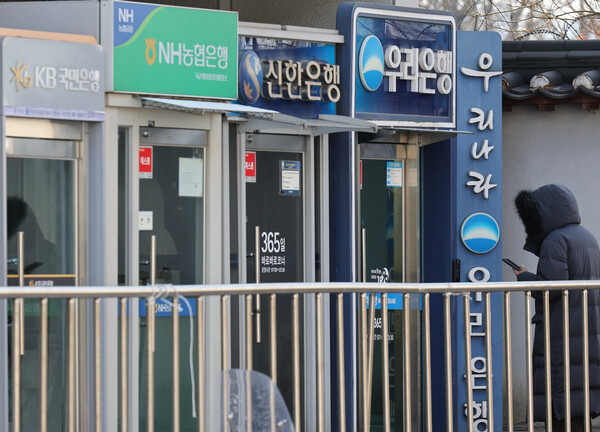
KB Kookmin Bank, Shinhan Bank, Hana Bank and NH NongHyup Bank are offering various structures, focusing on products with maturities of about 6 months to 1 year, as they seek to attract customers. These products are designed to provide additional interest depending on how much the index rises, and some products even present yields of more than 10 percent a year at the maximum.
This trend reflects changes in market conditions. According to the FSS, bank ELD sales rose to 4.9 trillion won in the second half of 2024 from 2.4 trillion won in the first half, and expanded further to 7.6 trillion won in the second half of 2025. Sales also continued to rise this year, with 900 billion won sold in January to February.
Factors cited behind the expansion include expectations for stock gains, falling deposit rates and substitution demand for equity-linked securities. As ELDs, which have a structure that relatively guarantees principal, are seen as an alternative, funds have been moving into them. Demand has also grown among investors seeking higher returns than deposits during a rising stock market.
ELDs, however, are different from simple deposits. Because the structure links the yield to stock index movements, the actual interest rate applied can vary widely depending on the index trend.
The FSS explains that for products that include a "knock-out option", the minimum interest rate could apply if the stock price rises or falls beyond a certain level. A representative structure is one in which, if the underlying index rises sharply and meets the condition, the minimum interest rate of about the 1 percent range is fixed rather than the maximum rate.
Penalties for early termination are also cited as a key risk factor. According to FSS data, if an ELD is terminated before maturity, not only is no interest paid, but an early termination fee of up to 0.95 percent may be imposed. It also showed that about 4.2 percent of products that matured between January 2025 and February 2026 were terminated early, and complaints have been raised that unexpected losses occurred in the process.
FSS, complaints rise... consumer understanding important
Financial authorities, taking these points into account, are calling on banks to strengthen management across product design and overall sales. The aim is to design structures that bring real benefits to consumers and provide sufficient explanations before subscription, rather than competing by simply pushing maximum interest rates. They also stress that banks need to judge whether the product is suitable for customers who can keep funds until maturity when selling it.
They are also watching the possibility of an increase in complaints about such products as volatility in financial markets grows due to external factors such as tensions in the Middle East. The FSS plans to inspect the state of consumer protection across the entire process for financial products including ELDs, from design to sales to after-sales management, and to respond preemptively to market fluctuations.
Experts point out that ELDs should be approached as mid-range products between deposits and investments. They say it is important to fully understand the profit structure and conditions, rather than signing up based only on the feature of principal protection. In particular, if consumers do not check in advance the range of stock index fluctuations, the conditions for fixing interest rates and the costs of early termination, a gap can arise between expected returns and actual results.
A banking official said, "The fact that principal protection and the deposit protection limit apply is certainly an advantage, but the point to note when investing is that, because it is a structure in which returns are conditional, there is a structurally agreed upper limit." The official added, "In a phase when stock prices are rising, you should be mindful that there is an opportunity-cost aspect of thinking it might have been better to just invest in stocks."
Ultimately, the expansion of ELDs by banks is the result of funding competition and changes in market conditions coming together, but the key going forward is likely to depend on product transparency and consumer understanding. Clearer structures and responsibility to explain are likely to emerge as core standards rather than competition over maximum interest rates.
A banking official said, "ELD products can meet the needs of customers seeking products with relatively higher interest rates than fixed-term deposits. In particular, there is clearly the advantage that principal is guaranteed if held to maturity." The official added, "Customers should subscribe with a clear understanding of the product structure."
 Ji-young Lee
ljy@d-today.co.kr
Ji-young Lee
ljy@d-today.co.kr