
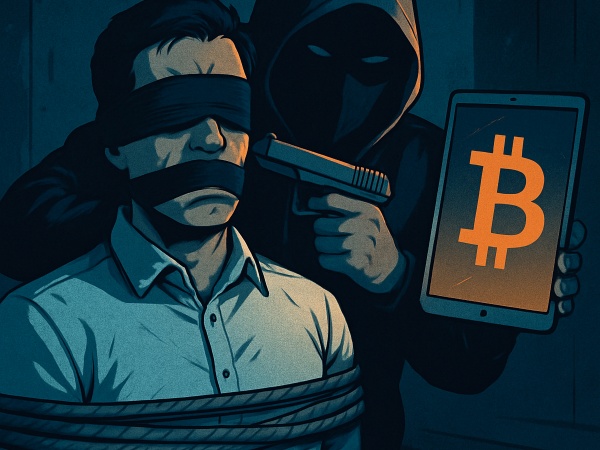
Kidnappings and home invasions targeting cryptocurrency holders are surging in France, pushing so-called "wrench attacks" into the spotlight as a major public security issue. As crimes using physical threats rather than digital hacking spread, the trend is seen as exposing a new weak point in cryptocurrency security.
CoinDesk, a blockchain media outlet, reported on April 19 that the French government said at least 41 such crypto-related kidnappings and home-invasion cases have occurred so far this year. The frequency is about once every 2 to 3 days. Security was significantly tightened at an international blockchain event recently held around the Carrousel du Louvre, heightening tensions.
French authorities are raising their response level. Jean Didier Berger and Laurent Nunez have begun working on additional measures, and are taking victim reports and protection requests through a prevention platform. Still, as cases rise quickly, critics say existing measures have limits.
A wrench attack forces a victim to approve an asset transfer by intimidation or assault instead of hacking a password. Once a transaction occurs, it is difficult to reverse, and funds become harder to trace after moving through multiple wallets and chains. Security expert Jameson Lopp said, "One successful case becomes a signal that draws new targets."
The method is also evolving. Phil Ariss of TRM Labs said criminals are going beyond simply targeting wallets, combining social media activity, records of attendance at public events and leaked data to track victims' daily patterns. He warned that the risk can rise sharply if a real identity and crypto assets become overly linked.
France is also drawing attention because of insider leaks. Concerns have grown that national data and insider risk can lead to real crimes after a case emerged in which a French tax official passed sensitive information to criminals. The possibility of cross-border links among criminal organisations has also been raised.
Victims are not limited to large holders. Mid-sized investors are also being targeted, and cases aimed at families are increasing. In January, Ledger co-founder David Balland (데이비드 발랑) was kidnapped, adding to the shock.
The trend is spreading globally. A security firm's tally showed 72 physical coercion cases worldwide in 2025, up 75 percent from a year earlier, while cases involving assault surged 250 percent. Many incidents are classified as ordinary robbery or burglary, suggesting the true scale could be larger.
Experts propose measures such as multisignature wallets, withdrawal delays and spending limits. Designing systems so that large funds cannot be moved immediately even under physical coercion can lower criminals' expected returns, they say.
As cryptocurrency adoption expands, wrench attacks are becoming a structural security threat beyond ordinary crime. The phenomenon seen in France is emerging as a global challenge that requires both protection for individual holders and improvements to investigative systems.
 Jinju Hong
hongjj@d-today.co.kr
Jinju Hong
hongjj@d-today.co.kr