
Samsung Electronics is making an all-out bet on "newlywed appliances". It is running a focused campaign aimed squarely at newlyweds, from its premium Bespoke AI lineup to its Micro RGB TV, which has drawn criticism for being "expensive". With last year's number of marriages reaching 240,000, the highest in seven years, and the share of births within two years of marriage expanding to 36.1 percent, the move is seen as an effort to pre-empt an appliance buying cycle concentrated in the two years immediately after marriage.
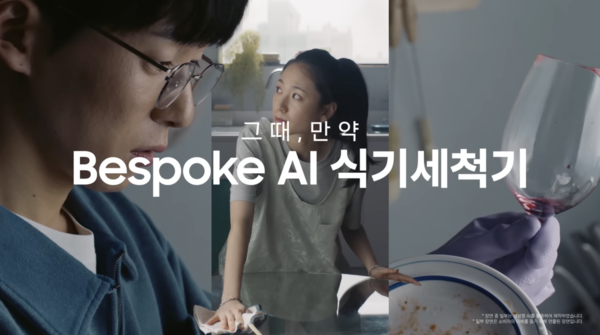
Samsung Electronics recently released six videos in a "newlywed appliances" series on its official channels, including one titled "Bespoke AI Combo AI appliances change newlywed life". The series covers six products: the Micro RGB TV, Bespoke AI induction, Bespoke AI dishwasher, Bespoke AI Family Hub, Bespoke AI Steam and Bespoke AI Combo. It uses a "one product, one ad" approach. The campaign is expected to keep expanding beyond the six items.
A key point is that the Micro RGB TV is included in the newlywed line. The 115-inch model, the first released, had a recommended retail price of 44.9 million won, and the 2026 85-inch model is priced at 9.29 million won. With a lineup focused on large sizes from 55 to 100 inches, it has been seen as a premium living-room TV aimed at high-income households with spacious living rooms.
Samsung Electronics' visual display business also said at the time of the Micro RGB launch, "We will meet consumer demand for the best picture-quality experience and secure leadership in the premium TV market." Adding a product positioned this way to a newlywed target is seen as an attempt to expand the flagship customer base to those in their early 30s.
At "The First Look Seoul 2026" in January, it said it would add AI features across its entire 2026 TV lineup, including premium lines such as Micro RGB, OLED and Neo QLED, as well as more affordable Mini LED and UHD models. Vertical integration linking premium and entry-level products has become clearer, with the newlywed target as a catalyst.
Behind this is an unusual rebound in demographic structure. According to the National Data Agency, the number of marriages last year rose 8.1 percent from a year earlier to 240,000. That was the largest since 2018, when there were 258,000 marriages. After falling for 11 straight years from 2012, marriages rebounded in 2023 and have risen for three consecutive years. The biggest increases were among men and women in their early 30s. Marriages rose by 12,000 for men, up 13.5 percent, and by 11,000 for women, up 13.2 percent. The average age at first marriage was 33.9 for men and 31.6 for women, indicating a late-marriage structure in which people marry after building up some income.
A rebound in births also contributed. The number of newborns last year rose 6.8 percent from a year earlier to 254,500. It was the largest increase since 2010, 15 years ago. The total fertility rate was 0.80, returning to the 0.8 range for the first time in four years. In particular, the share of births within two years of marriage expanded to 36.1 percent. As marriage and childbirth become more compressed, demand for wedding appliances and childcare-related appliances is increasingly concentrated in a specific stage of life.
◆ More concentrated buying tendencies...the next '2 years' are the watershed
So why put "AI" front and centre. It can be seen as a design that directly targets the household burden of dual-income newlyweds. Samsung Electronics recently applied an upgraded Bixby to its AI appliances. Based on a large language model, it has been enhanced to understand everyday conversation and, combined with the generative AI service Perplexity, supports "open Q&A". If a user says, "I put beef and mackerel into the Family Hub, so change the mode," it automatically sets a "meat/fish mode". If a user says, "When the laundry is done, clean the floor," a robot vacuum moves after the washing machine finishes, choosing a direction aimed at removing what it calls "hassle".
Responsiveness by housing type is also a key axis of its newlywed-market strategy. Samsung Electronics has segmented its garment-care lineup into an all-in-one combo, a combined one-body type and separate washer-and-dryer models, targeting newlywed households with varying living environments from studio apartments to owner-occupied homes. It has also built credibility indicators. The Bespoke AI ice water purifier received NSF certification on the 14th for removing 82 types of harmful substances, the most among domestic countertop water purifiers.
Samsung Electronics' bet focuses on "2 years" because of the structural time lag between marriage and childbirth. The National Data Agency has analysed that it takes about two years for an increase in marriages to lead to an increase in births. With last year's marriages jumping to 240,000, it means appliance purchases by newlywed households are likely to concentrate over the next two years. That is the backdrop to Samsung Electronics running a full-set campaign spanning TVs, kitchen appliances, laundry and water purifiers. In the past, appliances were bought in stages over a long period at times such as weddings, childbirth and moving. Recently, more cases involve buying a full set in a single rush during wedding preparations.
That is why, for Samsung Electronics, the next two years are a chance to sell a package at once to customers whose buyer, timing and source of funds are all unified. An industry official said, "As the number of dual-income newlyweds increases, couples are showing a stronger tendency to buy appliances all at once." In this segment, where the population in the early 30s is still increasing, how quickly Samsung Electronics absorbs newlywed demand is likely to affect the defensive line of its domestic sales performance in the home appliance business.
 Seok Dae-geon
d2dg@d-today.co.kr
Seok Dae-geon
d2dg@d-today.co.kr