
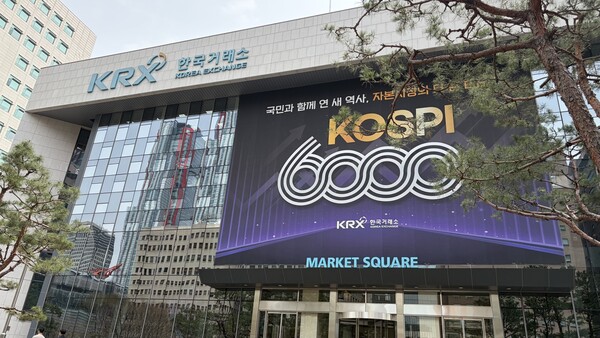
The Korea Exchange will raise market-capitalisation thresholds tied to delisting and introduce new requirements to delist so-called penny stocks, as it moves to remove weak companies from the market.
On April 17, the Korea Exchange re-notified proposed amendments to listing rules for the KOSPI and KOSDAQ markets, as a follow-up to its "delisting reform plan" announced in February. The core of the amendments is to bring forward the timing for applying market-cap requirements from what was originally announced and to strengthen management rules for low-priced shares that are easily targeted for price manipulation.
A key change is the higher market-cap requirement and earlier implementation. The exchange brought forward the application date by about 6 months to 1 year from the previously announced schedule to speed up the removal of weak companies.
From July 1, companies will enter delisting procedures if their market capitalisation stays below 30 billion won on the KOSPI or 20 billion won on the KOSDAQ.
From Jan. 1, 2027, the thresholds will be tightened further, with companies falling below 50 billion won on the KOSPI or 30 billion won on the KOSDAQ becoming subject to removal. The aim is to prevent small, marginal companies from causing market inefficiencies.
Regulation will also become stricter for so-called penny stocks with share prices below a certain level. Under the amendments, a company whose share price stays below 500 won for 30 consecutive trading days will meet delisting criteria, regardless of whether it trades below par value.
The exchange said penny-stock companies are often involved in unfair trading such as price manipulation and undermine overall market soundness, explaining why it introduced the new requirement.
It reflected a series of negative cases in which shares tied to themes such as secondary batteries or quantum-related stocks were pushed up within a few months from the hundreds of won to the thousands of won.
Still, it plans to start calculating the requirement from July 1 so companies can raise their value on their own through share consolidations or capital reductions.
Standards for financial soundness and disclosure obligations will also become stricter.
Previously, capital impairment was judged based on year-end results. Going forward, if a half-year report confirms a complete capital impairment, delisting procedures will begin immediately. The policy is to reduce the time that companies showing clear signs of weakness remain in the market and minimise damage to investors.
Responsibility for unfaithful disclosures will also become heavier. The exchange plans to raise the cumulative penalty-point threshold for disclosure violations to expand the scope of companies subject to substantive reviews of listing eligibility and to respond more firmly to companies that deliberately avoid disclosure.
A Korea Exchange official said the amendments are aimed at swiftly removing zombie companies to establish a virtuous cycle in the capital market. The official said the exchange will collect opinions until April 24 during the re-notification period, obtain approval from the Financial Services Commission in May and fully implement the changes from July 1.
 Sangyeop Oh
yub@d-today.co.kr
Sangyeop Oh
yub@d-today.co.kr