
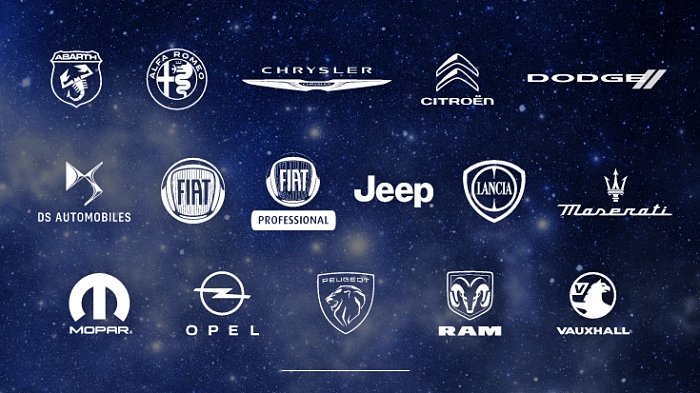
Stellantis will work with Microsoft (MS) for 5 years to introduce artificial intelligence (AI) across vehicle services, software development and cybersecurity. With the auto industry becoming more dependent on software, the move is seen as a strategy to raise AI into a core competitive capability.
On April 16 (local time), IT outlet Ars Technica reported that the partners plan to jointly pursue improvements in customer digital services, stronger vehicle development capabilities and greater stability for connected services.
The focus of the partnership is features drivers can feel and better manufacturing efficiency. Stellantis will use AI to speed up product development while expanding predictive maintenance algorithms and in-car efficiency guidance. Vehicles would detect signs of failure in advance or suggest more efficient ways to drive and manage the car.
AI will also be deeply integrated into in-vehicle software. Ned Curic (네드 큐릭), Stellantis' chief engineering and technology officer, said AI is already used across engineering, manufacturing, design and customer touchpoints, and is being directly built into the core of new digital cabins and vehicle operating systems. He said he expects collaboration with Microsoft to speed AI adoption across the organisation and raise development and operating efficiency.
The two companies also cited connectivity and security as key tasks. Stellantis plans to strengthen its ability to respond to cyberattacks through AI-based analysis and to improve the resilience of connected services. For example, it aims to provide stable communications and data protection even in remote areas to increase driver trust.
The partnership aligns with the industry's shift toward software. Cloud linkage, active safety systems and large displays are spreading quickly in vehicles, but security and personal data protection for connected services remain challenges. Some regulators have called for a return to physical buttons, and some automakers are moving to restore parts of traditional interfaces against that backdrop.
In this situation, Stellantis chose a strategy of using Microsoft's cloud, AI and security platforms rather than developing its own. Judson Althoff (저드슨 올소프), CEO of Microsoft's commercial business, explained that the partnership is aimed at advancing AI transformation more safely and responsibly across the automotive value chain.
Changes are also expected in how infrastructure is run. The partners set a goal of cutting data-centre usage by about 60 percent by 2029 by opting for efficiency improvements rather than expanding servers. The strategy is to manage cost and energy burdens while expanding the use of AI.
A key question will be whether AI functions lead to real improvements in the user experience. Stellantis' predictive maintenance, connectivity and security functions have significant potential, but the nature of vehicle software makes stability and personal data protection verification essential.
 Jinju Hong
hongjj@d-today.co.kr
Jinju Hong
hongjj@d-today.co.kr