
Nvidia and Hitachi are expanding the scope of “physical AI” from robots to social infrastructure more broadly. They see a need for a different level of precision and verification than generative AI to apply AI to real systems such as trains, power grids and factories.
On April 15 local time, Japanese ITmedia reported that Hitachi is strengthening related businesses centered on its social-infrastructure AI solution, “HMAX by Hitachi”.
Aria Barirani (아리아 바리라니), chief marketing officer at Hitachi America, defined physical AI at CES 2026 in Las Vegas in January as “AI that perceives, reasons, interacts with and acts in the physical world”. He said AI should not be viewed as limited to robots and stressed that social infrastructure such as transformers, transmission networks, trains, signaling systems and bioreactors are key application areas.
Accuracy is central. Tiffu Thala (티푸 탈라), vice president for edge AI and robotics at Nvidia, explained the required precision in terms of the number of “nines”. Building management systems require “six nines”, autonomous driving “10 nines” and surgical robots “15 nines”, he said. Unlike generative AI, where mistakes can amount to simple information errors, malfunctions in physical AI can directly affect safety and operations.
The process of introducing AI into social infrastructure also faces major constraints beyond technology. Hitachi pointed to long-life facilities operated for decades, low digital connectivity and a highly regulated environment as key challenges. In rail and energy in particular, it said decision-making traceability is needed, along with structures that allow humans to stop or modify AI judgments when necessary.
Nvidia presented a three-computer structure as a development approach to meet these requirements. It involves training AI models in a data centre, then conducting large-scale verification in a simulation environment, and finally applying them to on-site operating systems. The key, it said, is the ability to run millions of tests in a virtual environment without stopping real factories or trains.
A lack of data is also cited as a major challenge. Real failure data, such as abnormal vibrations in factories, rail defects or anomalies in bioprocessing, are difficult to secure and not easy to reproduce. As a result, the use of synthetic data is expanding. Nvidia’s world foundation model, “Cosmos”, is used to generate various physical environments and combine them with real sensor data to supplement training data.
Nvidia is also providing various open models to help spread physical AI. Examples include the language model “Nemotron”, “AlphaMayo” for autonomous driving, “GR00T” for humanoid robots, “BioNemo” for biopharmaceuticals and “Earth-2” for climate simulation. Its strategy is to release model weights and training tools together so companies can use them for their own environments.
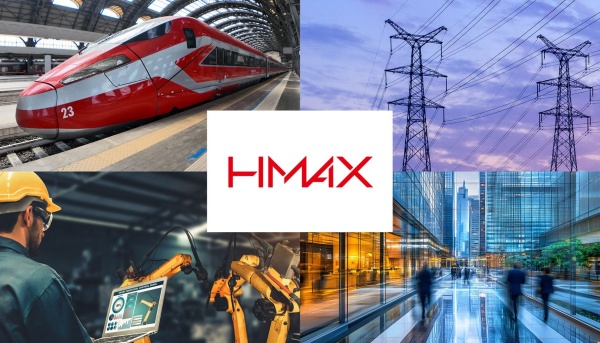
Hitachi’s HMAX is designed around three areas: mobility, energy and industry. It is structured to evolve into on-site solutions by combining synthetic data and AI models based on accumulated sensor data and domain knowledge from transformers, transmission networks, trains and factory facilities.
The industry sees competition in physical AI shifting beyond simple model performance to encompass data, simulation, regulatory response and industry-specific operational knowledge. In infrastructure environments that cannot be stopped, analysis suggests that the level of verification and the ability for human control, rather than AI performance, will be key criteria for adoption.
 Jinju Hong
hongjj@d-today.co.kr
Jinju Hong
hongjj@d-today.co.kr