
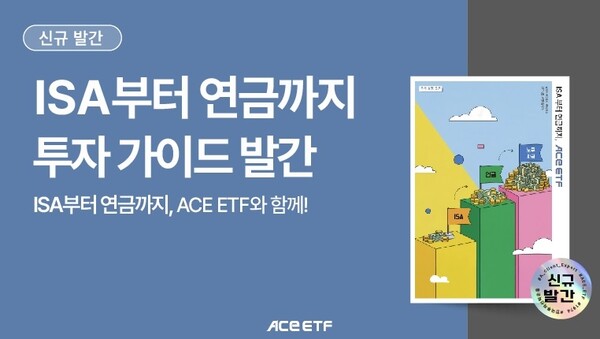
Korea Investment Trust Management said on Thursday it published an 'ISA Pension Guidebook' that lays out an asset management strategy linking individual savings accounts (ISA) and pension accounts (pension savings and retirement pensions).
The guidebook explains the investment process step by step, from building a lump sum using an ISA to transferring funds at maturity and creating income after retirement.
It offers practical guidance centred on long-term investment strategies using tax-saving accounts and asset allocation methods using exchange-traded funds (ETF).
According to the guidebook, an ISA is a representative tax-saving account that can raise after-tax returns through various tax benefits, including netting gains and losses, tax exemption and separate taxation, and tax deferral. It also said an ISA is suitable for building assets over the short to medium term because a range of products, such as deposits, stocks and ETFs, can be managed in a single account.
It stressed that a core ISA strategy is to prioritise assets with high tax efficiency, because tax-saving effects are maximised when including overseas equity ETFs or dividend assets that carry heavier tax burdens than general accounts.
It also introduced a tax-saving strategy of transferring funds to a pension account after an ISA matures. Additional tax credits are available if maturity proceeds are transferred to a pension account within 60 days of the maturity date.
A pension account is a tax-saving structure based on long-term investment. It can maximise compound returns through tax credits on contributions and tax deferral during the investment period, and after retirement a pension can be received at a low tax rate of 3.3 to 5.5 percent.
This, it said, makes it possible to build a 'virtuous cycle structure of tax-saving investment' that runs from building assets through an ISA to transferring to a pension and securing retirement income.
Lee Hyo-jung (이효정), head of the ETF Marketing Department at Korea Investment Trust Management, said, "There is volatility depending on market conditions, but tax savings allow investors to expect a virtually certain return depending on which account they use." She added, "With an ISA account, you can receive tax-saving benefits, and with a pension account, you can efficiently prepare for retirement."
 Sangyeop Oh
yub@d-today.co.kr
Sangyeop Oh
yub@d-today.co.kr