
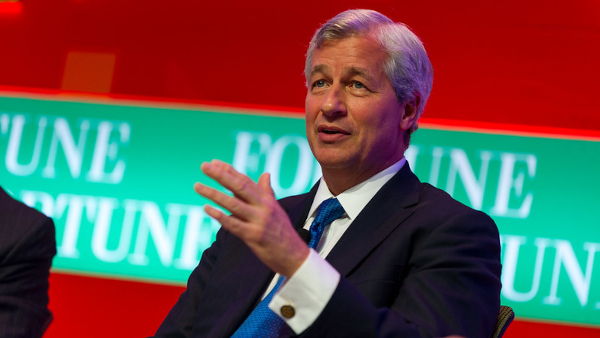
JPMorgan CEO Jamie Dimon (제이미 다이먼) warned in his annual shareholder letter that geopolitical conflict, national debt and structural fragilities in financial markets are acting at the same time, increasing uncertainty for the global economy. It may look stable on the surface, but conditions are forming that are vulnerable to shocks, he said.
On April 6, blockchain outlet Cryptopolitan reported that the first risk Dimon pointed to was geopolitics. He said the Russia-Ukraine war and Middle East tensions linked to Iran are increasing volatility in energy prices. The direction of the two conflicts could affect the global economic order in 2026, he said, stressing the need for an appropriate resolution.
U.S.-China relations were also cited as a key variable. Dimon said ties between the United States and China will determine the direction of the world economy, and predicted trade-related conflict could make this year a rough road. The near-term impact of tariffs themselves may be limited, he said, but their long-term ripple effects are large because they have triggered a reshaping of global supply chains and the trade order.
On the fiscal side, he said the global debt problem has reached an extreme level. Stressing the importance of growth to prevent crises, he said that for the United States, a combination of lower interest rates and growth of about 3 percent could ease the debt burden.
On financial markets, he warned that high asset prices and low credit spreads could themselves be risk factors. The higher valuations are and the tighter spreads become, the greater the chance that even a small shock could spread into a 'chain of liquidations,' he said. In particular, he said rapid growth in private credit and private equity markets is increasing embedded vulnerabilities despite apparent stability.
Dimon also outlined a response strategy. He said that through the Security and Resilience Initiative, about 1.5 trillion dollars would be invested over the next 10 years to strengthen economic security and industrial resilience. He cited supply chains and advanced manufacturing, defense and aerospace, energy independence, strategic technologies such as AI, cybersecurity and quantum computing, and pharmaceuticals and healthcare as key investment areas.
Dimon said, "We must not become complacent about the stability that appears on the surface," adding that if multiple risks materialise at the same time, the global economy could suffer a larger shock than expected.
 Jinju Hong
hongjj@d-today.co.kr
Jinju Hong
hongjj@d-today.co.kr