
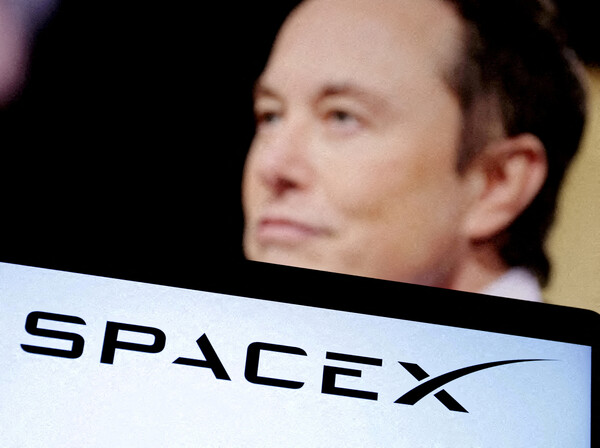
[DigitalToday reporter Sangyeop Oh] Space-related beneficiary stocks and exchange-traded funds (ETFs) in South Korea are broadly gaining strength as SpaceX's push for an initial public offering (IPO) coincides with the successful launch of the Artemis 2 lunar exploration craft.
As of April 3, space-related stocks and ETFs in the domestic market show a clear upward trend. According to the Korea Exchange, KODEX U.S. Aerospace closed at 10,630 won, up 780 won, or 7.92%, from the previous session. 1Q U.S. Aerospace Tech also ended at 12,500 won, up 820 won, or 7.02%.
Individual stocks that directly and indirectly hold SpaceX stakes also rose.
Mirae Asset Venture Investment rose 1,700 won, or 6.60%, to 27,450 won. Mirae Asset Securities ended up 1,500 won, or 2.44%, at 63,100 won, while Aju IB Investment closed up 50 won, or 0.57%, at 8,830 won.
Hanwha Aerospace, Hyundai Rotem and Satrec Initiative, among other major South Korean companies in the space value chain, also showed intraday strength on space momentum.
NASA successfully launched the crewed lunar mission Artemis 2 on April 2, further stoking investment sentiment in space. As crewed lunar exploration moves onto track, interest is focusing on related beneficiaries such as launch vehicle engines, parts supply and satellite system development.
South Korean defense companies Hanwha Aerospace and Hyundai Rotem said at recent shareholders meetings that they added the space industry as a new business purpose and will make it a mid- to long-term growth driver.
Satellite system developers Satrec Initiative and Hanwha Systems are also drawing market attention as direct beneficiaries related to space launch vehicles and satellites. Sphere has signed a long-term supply contract with SpaceX worth about 1.5 trillion won and plans to supply about 77.2 billion won worth this year.
SpaceX, the biggest focus for the market, submitted a confidential draft registration statement to the U.S. Securities and Exchange Commission (SEC) with the aim of listing in June, around CEO Elon Musk's 55th birthday.
The target valuation is up to $2 trillion, or about 3,022 trillion won, and the deal is expected to raise a record amount of funds. The Nasdaq exchange revised related rules in an unconventional way to attract SpaceX, including abolishing the minimum free-float requirement and shortening the index inclusion waiting period to 15 trading days.
In South Korea's stock market, Mirae Asset Securities, which invested early in SpaceX, has emerged as a representative beneficiary stock.
Mirae Asset Securities posted 2.6227 trillion won in profit in the FVPL category, which shows short-term investment performance, surging 2,074.8% from a year earlier on the back of investment effects from SpaceX and xAI last year.
As the space theme booms, competition among asset managers to attract ETF investors is also intensifying. Korea Investment Management's 'ACE U.S. Space Tech Active ETF' and Shinhan Asset Management's 'SOL U.S. Aerospace TOP10 ETF' are set to be listed this month.
Still, aggressive marketing patterns linked to overheating investment have also emerged. Hana Asset Management recently sought to indirectly include unlisted SpaceX equity in the 1Q U.S. Aerospace Tech ETF, but withdrew the total return swap (TRS) contract after criticism from the Financial Supervisory Service and apologised to investors.
Experts advise investors to guard against short-term theme-driven investing and to distinguish stocks with tangible benefits.
Kim Jae-im (김재임), an analyst at Hana Securities, said, "This year, SpaceX's listing and various space projects by NASA and the U.S. government are scheduled to be carried out," adding, "Major U.S. space industry stocks will become full-fledged global investment targets."
Kim added, "Factors such as the Iran war and high volatility are considerations, but given that the space industry is a powerful investment theme over several years, it is judged that sufficiently good opportunities can be found."
 Sangyeop Oh
yub@d-today.co.kr
Sangyeop Oh
yub@d-today.co.kr