
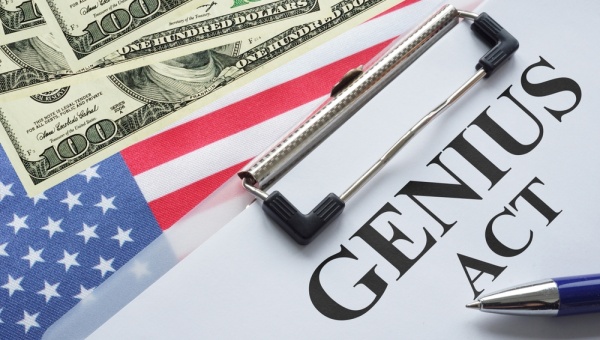
Federal Reserve Governor Michael Barr (마이클 바) said clearer stablecoin rules could speed market growth, but warned that the implementation of the GENIUS Act must also control risks related to money laundering, bank runs and consumer protection.
On April 1, local time, Barr said at an event on stablecoin regulation that the GENIUS Act could provide the “clarity” issuers need, but that actual results could vary depending on how federal and state regulators enforce it, Cointelegraph reported.
He said stablecoins are now mainly used for cryptocurrency trading and in some overseas markets as a store of dollar value, but their use could expand to lowering remittance costs, speeding up trade finance processing and supporting corporate cash management. He added that because stablecoins can be bought on secondary markets without identity verification, the risk of illicit funds entering the system remains.
Management of reserve assets was also raised as a key issue. Barr warned that if issuers have stronger incentives to pursue higher returns on reserves, confidence in redemptions could be shaken in periods of market stress.
The GENIUS Act was enacted in July 2025 and established a federal regulatory framework for payment stablecoins in the United States. Under the law, issuers must maintain 1-to-1 backing with reserve assets such as U.S. dollars and Treasury securities. The effective date is the earlier of 18 months after signature or 120 days after final rules are set.
The U.S. Treasury began a second round of public comment procedures in September 2025 to prepare implementation rules. Federal Reserve Vice Chair for Supervision Michelle Bowman (미셸 보먼) said in February that bank regulators were preparing capital and liquidity rules for issuers, while FDIC Chairman Travis Hill (트래비스 힐) noted in March that stablecoins are not covered by deposit insurance under the law.
Barr cited remaining issues including reserve requirements, regulatory arbitrage, the scope of issuers’ activities beyond issuance, capital and liquidity requirements, anti-money laundering checks and consumer protection standards. He also pointed to the U.S. Free Banking Era and the Panic of 1907, money market fund strains during the global financial crisis and the COVID-19 shock, and recent pressure on stablecoin values as historical examples of private money with weak safeguards.
 Yoonseo Lee
yslee@d-today.co.kr
Yoonseo Lee
yslee@d-today.co.kr