
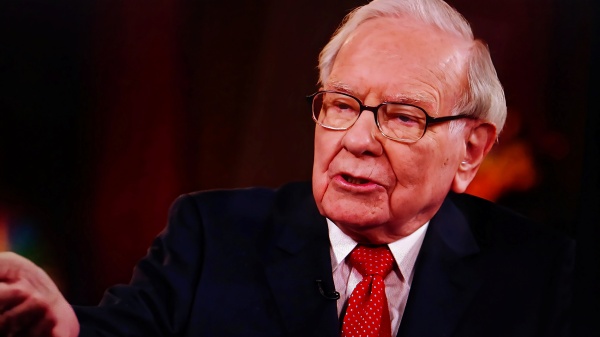
[DigitalToday reporter Jinju Hong] Warren Buffett, chairman of Berkshire Hathaway, warned that the banking system is strong yet fragile and that a financial panic could spread in a chain reaction.
On April 1 local time, CoinPost reported that Buffett told CNBC the Federal Reserve should focus above all on maintaining the stability of the financial system as links between banks and non-bank finance have tightened.
Buffett assessed that today’s banking infrastructure is solid on one hand but could be structurally fragile on the other. He noted that JPMorgan handles as much as $10 trillion in transactions a day and said, "It is all unsecured." The comment reflected a warning that as large financial institutions process bigger volumes of payments and transactions, system risk can rise nonlinearly.
He also mentioned chain risks that include non-banks. "Everything affects everything else, and a problem on one side spills over to the other," Buffett said, stressing that a shock in a specific market can quickly spread to other financial sectors. He also said he did not "know exactly" how to gauge the specific risks of the private credit market, but added, "That is why you always have to be prepared."
Private credit is a structure in which investment funds and others lend directly to companies without going through banks, and global assets under management have grown to $2 trillion. In 2026, fund returns deteriorated to near zero or turned negative, and a series of funds saw redemption requests hit contractual caps. There were also criticisms that because loan valuations rely on internal estimates, risks are hard to surface.
On monetary policy, Buffett said that if he were Fed chair, he did not "know" whether to cut interest rates, showing a cautious stance. On the Fed’s 2 percent inflation target, he said he "would have liked it to be zero," arguing that even 2 percent can increase the burden of prices through compounding. "What I care most about at the Fed is the stability of banks rather than inflation," he said, stressing that the central bank should put emphasis on financial stability.
That view is also reflected in Berkshire’s asset-management approach. Berkshire Hathaway maintains a policy of holding only cash and U.S. Treasuries, and not holding money market funds or commercial paper. The company’s combined holdings of cash and U.S. Treasuries are reported to exceed $350 billion.
 Jinju Hong
hongjj@d-today.co.kr
Jinju Hong
hongjj@d-today.co.kr