
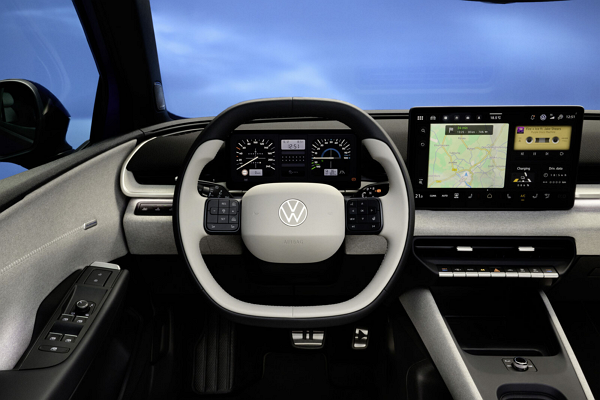
Volkswagen has made clear it will shift its in-car controls back to a focus on physical buttons.
InsideEVs, an electric-vehicle outlet, reported on April 1 that Volkswagen CEO Thomas Schaefer (토마스 셰퍼) said in a recent interview with Top Gear that returning to physical controls was “non-negotiable”.
The remarks are seen as a sign Volkswagen will effectively revise the touch-centred design direction it has pursued in recent years. In line with broader industry trends, Volkswagen has reduced conventional buttons and expanded flat touch and capacitive controls. But consumer complaints have built up over the user experience. The design drew criticism in particular for making it impossible to operate rear-seat windows directly from the driver’s seat with dedicated buttons, even though it used physical switches like window controls.
Schaefer attributed the design direction to the influence of an “iPhone-ish kind of design” and said it was not easy to bring the designer organisation back to more intuitive physical controls. Stressing internal principles, he said, “There are two things that are absolutely non-negotiable to me. Door handles and buttons.” He added, “I cannot understand why someone uses touch-sensitive sliders.”
Volkswagen’s return to physical buttons is not simply a matter of taste but closer to a strategic realignment aimed at rebuilding brand trust that has wavered in the electrification race. The outlet said the Volkswagen brand has sold a cumulative total of more than 2 million electric vehicles but faces challenges in several markets. Schaefer said he is setting core principles to lift demand again, citing an expansion of physical buttons and a return to model naming that is easier for consumers to understand.
Behind the industry response is a broader battle over user interfaces across the auto sector. After Tesla reconfigured interiors around a large iPad-style display, many automakers followed suit, making large touchscreens a de facto standard. But many companies failed to deliver a smooth, intuitive interface on par with Tesla, and that gap has led to consumer backlash, an analysis said. Volkswagen Group brand Scout Motors was also cited as putting tactile controls at the centre of its strategy in the same context.
Schaefer explained in more detail what Volkswagen means by intuitiveness. “Volkswagen must have a friendly face, and door handles must also be intuitive. They should be easy to use even when you arrive at your car with both hands full of shopping,” he said. “We will bring back real buttons and real names for cars you can understand immediately,” he added.
 Jinju Hong
hongjj@d-today.co.kr
Jinju Hong
hongjj@d-today.co.kr