
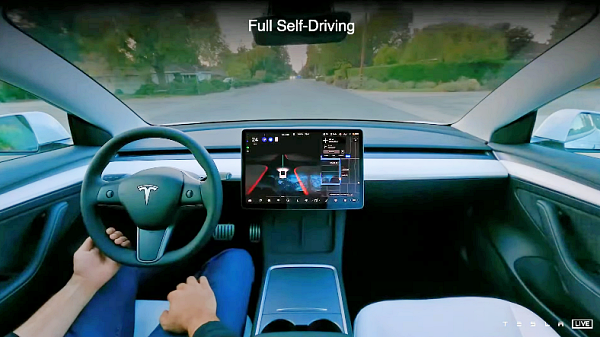
Tesla has officially acknowledged that if its robotaxi self-driving system reaches its limits, a remote-control worker can drive the vehicle directly. The admission is again fuelling controversy over the completeness and transparency of its Full Self-Driving (FSD) technology.
On March 31 (local time), major foreign media including IT outlet Engadget reported that Tesla's director of public policy and business development, Karen Stakeley, said in a letter to U.S. Senator Edward Markey that a Remote Assistance Operator (RAO) can directly control a vehicle in rare cases. Tesla described it as a final-stage redundant safety measure applied after all other intervention measures have been exhausted. It added that it is a way to move the vehicle and resolve the situation without waiting for on-site personnel.
Documents released also included specific conditions under which such remote intervention is possible. Tesla's remote operator can assume temporary control when a vehicle is stopped or traveling at about 3.2 kph or less. The operator can then drive directly at up to about 16 kph within limits permitted by the self-driving software. The company said it runs the function with its employees through operations centres in Austin and Palo Alto, with the aim of moving vehicles to a safe location in emergencies to reduce road congestion.
The operating model is drawing more attention as it is compared with approaches by other self-driving companies. For example, Google's Waymo has said its remote support team, fleet response, focuses on understanding surrounding conditions through vehicle sensors and providing information so that the software can make decisions. It has said remote staff do not directly drive the vehicle. That differs from Tesla in that the system handles actual steering and driving while support is provided remotely.
Politicians are also raising issues in the wake of the matter. Markey criticised self-driving companies for stressing that they can reduce human mistakes while needing to be more candid about how much they actually depend on people. He said Tesla's use of the name 'FSD' has created room for consumers to perceive it as technology that does not require human intervention. He stressed the need for transparent disclosure on whether robotaxi operations rely on remote personnel.
Tesla currently has a system in place that allows remote operators to intervene in robotaxi operations in case the self-driving system cannot handle certain situations. The newly disclosed information is being interpreted as confirming that robotaxis are not operated only fully autonomously and that, if necessary, a person can remotely drive the vehicle directly. It is again prompting debate over how FSD is actually operated.
Ultimately, regardless of Tesla's technological advances, the official confirmation that human intervention is possible is expected to further expand social debate over the real level of self-driving technology and the definition of 'FSD'.
 Kyung-min Hong
hongm@d-today.co.kr
Kyung-min Hong
hongm@d-today.co.kr