
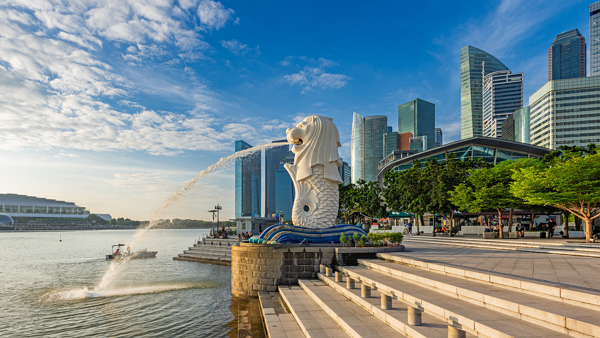
After U.S. and Israeli air strikes on Iran increased volatility in energy markets, countries are moving to save fuel and step up emergency responses. Singapore was identified as the most vulnerable country if global supplies are disrupted.
According to blockchain outlet BeInCrypto on March 30, Energy World Mag assessed “energy vulnerability” in 75 countries in a recently released report. It calculated scores from 0 to 100 based on seven indicators, including reliance on fossil fuels, energy self-sufficiency and dependence on imports. A higher score means a structure more vulnerable to supply shocks.
Singapore ranked first with 85.2 points. It relies on fossil fuels for about 98 percent of its energy, and imports all of its natural gas. Its energy imports exceed domestic production by 243 percent, the report found, limiting alternatives if global supply chains are disrupted.
Turkmenistan ranked second with 80.7 points. It relies on fossil fuels for 100 percent of its electricity and has almost no alternative infrastructure such as renewable energy, the report said. It also cited average income of about $9,000 as a vulnerability, making it hard to absorb household shocks if energy prices surge.
Hong Kong ranked third with 80.2 points. Its energy imports are 176 percent higher than production, and it also depends entirely on overseas supplies for natural gas. Morocco at 74.6 and Belarus at 74.2 also ranked near the top, with the report analysing both as vulnerable to price shocks due to high import dependence combined with low income levels.
Experts stress the results are not simply a divide between wealthy and low-income countries. During the 2022 energy crisis, major economies such as Germany and Italy implemented energy rationing measures. They said countries with almost no domestic energy production base, such as Singapore and Hong Kong, carry greater risk because it is difficult to respond by substituting with coal or domestic gas if supplies are cut.
The Singapore government has highlighted some capacity to respond. Manpower Minister Tan See Leng (탄 시 렝) noted that about half of the country’s gas volumes are supplied via pipelines, so they are not directly affected by Middle East conflicts, and said the government is also maintaining fuel stockpiles.
But some point to this as only a short-term buffer. International oil prices are moving in a high range above $100 a barrel, and concerns are growing that stockpiles alone would be insufficient if supply disruptions become prolonged. The more heavily a country depends on energy imports, the greater the chance that rising prices and shortages will occur at the same time.
The assessment is interpreted as an indicator of which countries would come under pressure first if an energy crisis recurs. The analysis said it again confirms that the more a country combines import dependence, a lack of alternative energy and limited income capacity, the faster and larger the shock can be.
 Jinju Hong
hongjj@d-today.co.kr
Jinju Hong
hongjj@d-today.co.kr