
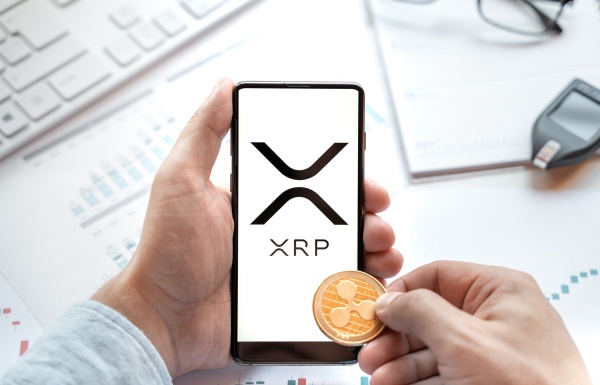
[DigitalToday reporter Jinju Hong (홍진주)] A new approach to investing in XRP is drawing attention among retail investors. It reflects a growing view that returns depend on how to design a selling strategy in rising markets, rather than simply increasing the number of tokens held.
The Crypto Basic, a blockchain media outlet, reported on March 28 that YouTube creator BULLRUNNERS argued that even small investors can achieve meaningful results, citing an example of holding 1,000 XRP. At a current price of about $1.36, 1,000 XRP is worth only about $1,360, but results can differ sharply in an upcycle when price gains combine with strategic selling, it said.
The analysis divides XRP price outlooks into three scenarios. First, a realistic “conservative range” is put at $5 to $25. Even reaching that range would lift the value of 1,000 XRP to several thousand dollars, and investors could expect tangible financial improvements such as recovering initial capital, paying down debt or securing cash liquidity.
A second “middle scenario” is a $30 to $50 range. That is assessed as possible if institutional investment expands and a broader crypto bull market accompanies it. The analysis says the likelihood increases if XRP strengthens its position as international payment and remittance infrastructure and large-scale capital inflows occur.
A “moonshot scenario” of a super-bull case above $100 is frequently mentioned in online communities, but is widely assessed as unlikely to be achieved in the short term. If XRP reaches $100, its market capitalisation would expand to about $6.1 trillion, which would be larger than global big tech companies such as Nvidia, Google and Apple.
The discussion puts the greatest emphasis on the importance of selling strategy rather than the price outlook itself. It points to a pattern in which many retail investors fail to time sales during a bull market, hold through the end and then give back most profits in a downturn in a repeated “round trip” mistake.
Experts are therefore presenting an “incremental profit-taking” strategy that locks in gains in portions at set ranges. For example, an investor sells part of a position each time a specific price range is reached to recover principal, then uses the remaining position to respond to further upside. The strategy helps investors reduce risk while maintaining upside potential.
Advice is also emerging that it is important to exclude emotional judgement and sell mechanically at pre-planned price ranges. If investors set excessive targets or rely on expectations that prices will rise further, they are more likely to miss opportunities to take profits.
The core of the analysis is whether retail investors can execute pre-planned exit strategies in a bull-market phase, rather than how far XRP prices rise. It says this is not a simple price forecast, but a matter of setting clear targets and maintaining execution discipline. Among retail investors, a view is gradually spreading that in crypto markets with high volatility, strategy can determine outcomes more than the size of holdings.
 Jinju Hong
hongjj@d-today.co.kr
Jinju Hong
hongjj@d-today.co.kr