
A U.S.-driven tariff dispute that looked as if it was over is showing signs of restarting. South Korea and the United States concluded tariff talks last July. They moved toward wrapping up the process by agreeing even on details at APEC in October. At the time, the government announced that "uncertainty over exports to the United States had been resolved."
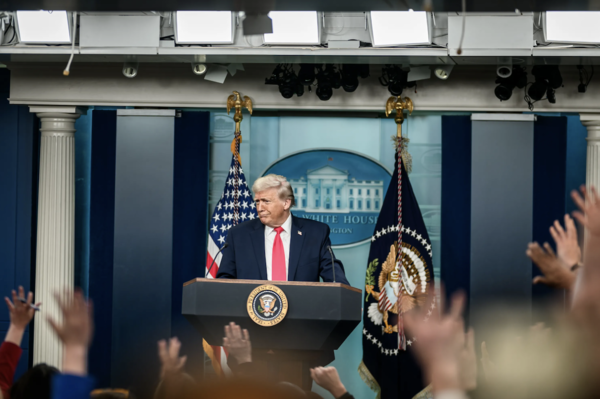
But in February this year, the U.S. Supreme Court ruled IEEPA tariffs illegal and invalid, flipping the situation again. U.S. President Donald Trump immediately signalled that he would impose global tariffs of 15 percent under Section 122 of the Trade Act and launch a Section 301 investigation. He had set the figure at 10 percent, but changed his mind after just a day.
Tariffs are no longer a variable. The fact that they are not set has itself become a constant. Voices from the industry are consistent. Companies say if the rate is set, whether 15 percent or 25 percent, they can adjust supply chains and reallocate investment. What actually stops companies is the fact itself that they "cannot know tomorrow."
The government's efforts are not lost on anyone. The industry minister has visited the United States several times, and the trade minister sat at the negotiating table. The president also urged a better outcome, and even business group chiefs including those at Samsung Electronics took part in the tariff talks. From February last year to now, the trade ministry has issued close to 100 press releases related to tariffs. The government, also frustrated with the situation, held an emergency meeting over the weekend to reassure companies.
But even if it is President Trump who changes tariffs at will, companies may feel even more frustrated with their own government. A year ago they might have waited, trusting a promise to "communicate closely". Now that an agreement that was concluded is being shaken, those words sound not reassuring but unsettling.
To be sure, the government has a 270 trillion won trade insurance support package it announced last September. But this is close to a belated remedy. Raising insurance limits and cutting interest rates after damage occurs is emergency treatment. Even emergency treatment needs breathing room, and there is none now. What companies want is predictability, and if that is impossible, they need a pre-emptive safety device that lets them endure uncertainty.
China provided a shield, and Germany took on the risk.
There are examples worth referencing. China, facing a tariff barrage during Trump's first term in 2019, ordered its state-owned export insurer SINOSURE to raise underwriting limits and lower premiums. It is effectively a "tariff bulletproof vest" that guarantees up to 95 percent of the risk of exporting to the United States for Chinese companies.
In 2024, it also provided export insurance at an unprecedented level to electric vehicle, battery and solar companies in response to Western pressure to cut supply chains, including EU tariffs on electric vehicles. Chinese companies can withstand the tariff war with the United States not only because of the size of the economy, but because the state provided a shield first.
Germany's Hermes Cover takes a different approach. It is a structure in which the state guarantees political risks that private insurers cannot turn into products, such as sudden tariff changes, import bans and war. If a company pays only a small fee, the state assumes the risk. Germany's Mittelstand, small and mid-sized "hidden champions" that form the backbone of the economy, lack the financial capacity to respond to shifts in the trade environment. This system lets them focus on their core business in overseas markets like large companies do.
South Korea also needs a forward-looking review, such as compensating part of tariff gaps or expanding the scope of export insurance to include "tariff risk". If companies ultimately profit, the money can be recouped then. Premiums can also be charged. It would also be possible to impose special premiums on applicant companies in industries with large tariff volatility.
If uncertainty cannot be eliminated, putting a bulletproof vest on Korean companies so they can endure it has become the government's role in a global era. That is like President Trump throwing tariff bombs at other countries for the sake of U.S. companies. This is the time to consider approaches not previously considered. "Tariff insurance" that eases companies' Trump worries is not a far-fetched fantasy, but a safety strategy already being implemented by major countries.
 Seok Dae-geon
d2dg@d-today.co.kr
Seok Dae-geon
d2dg@d-today.co.kr