
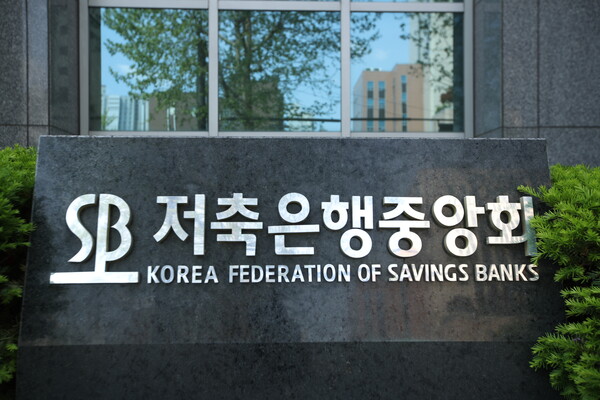
[DigitalToday reporter Ji-young Lee (이지영)] The savings bank sector ended two years of consecutive losses and returned to profit. But the mood is not purely upbeat, as the key driver of better results was cost cutting rather than a recovery in business. Structural trends such as shrinking lending and slowing interest income are continuing.
The Financial Supervisory Service and the Korea Federation of Savings Banks said on March 23 that the sector posted net profit of 417.3 billion won in 2025. That was an increase of 840.5 billion won from a year earlier, when it recorded a net loss of 423.2 billion won. It marked a rebound after losses in both 2023 and 2024.
But views in and outside the industry are cool on the nature of the profit. The improvement was driven by a drop in loan-loss provision expenses to 3.26 trillion won from 3.72 trillion won, down 460.0 billion won, and higher gains from securities operations. It crossed into the black by cutting costs, not by expanding normal business.
Key profitability indicators weakened. Net interest income came to 5.42 trillion won, down 42.7 billion won from a year earlier. Lower funding costs provided some buffer, but it was not enough to offset falling interest income from shrinking lending.
Total assets also fell to 118 trillion won from 120.9 trillion won, down 2.9 trillion won. Loans declined by 4.4 trillion won to 93.5 trillion won. The drop was notable in corporate lending, a result seen as reflecting a combination of clean-up of troubled real estate PF and an economic slowdown.
A Korea Federation of Savings Banks official also drew a line, saying, "With interest income shrinking due to factors such as a decline in loans, it is difficult to judge that business conditions have recovered."
◆ Authorities call for expansion, industry says business conditions still difficult
Soundness indicators improved on the surface. The delinquency rate fell to around 6.0 percent at end-2025 from 8.5 percent at end-2024, and the ratio of substandard-and-below loans dropped to the 8 percent range from the 10 percent range. The results reflect the impact of pre-emptive clean-up steps such as sales and write-offs of bad real estate PF loans. But the delinquency rate on household loans edged up by 0.14 percentage points to about 4.67 percent, and the absolute level is still seen as high.
Financial authorities have recently set a goal of redefining the role of savings banks. In a series of meetings with the industry, they stressed that savings banks should move away from short-term profit-driven business and strengthen their core function of supporting ordinary people and small and medium-sized companies. They also called for expanding mid-interest-rate loans and supplying credit based on growth potential rather than focusing on collateral.
The direction of system reform can be summed up as pursuing regulatory easing and tighter discipline at the same time. On the easing side, measures were pushed to expand the scope of corporate lending from small and medium-sized companies to mid-sized firms, aiming to diversify profit bases. For large players, investment limits in equities, unlisted shares and corporate bonds will be raised, and they will be allowed to directly handle payment instrument businesses. A system will also be introduced to encourage funding supply to regional areas by applying a lower weight to non-capital-area loans when calculating the loan-to-deposit ratio.
On the discipline side, authorities decided to classify savings banks by asset size and gradually apply bank-level soundness standards to large players. For evaluating corporate credit, they will introduce a system that reflects future repayment capacity. They will also step up joint management capabilities for bad loans and upgrade deposit monitoring.
The problem is that these demands for structural change are being made on top of a still-worsening business environment. As long as a recovery in the real estate market is delayed and the stance of managing household debt continues, the sector's key businesses of real estate-related credit and household lending are seen as unlikely to post a clear rebound. In addition, regulation on business areas was kept intact to preserve the identity of the sector as region-based financial institutions.
The return to profit after two years is clearly a meaningful turning point, but analysis suggests that for cost-cutting-driven results to lead to normalisation of business, a reshaping of loan portfolios and diversification of profit structures must take root in practice. Observers also see the need for authorities’ system design and the sector’s self-help efforts to work in tandem.
A Korea Federation of Savings Banks official forecast that "difficulties in the business environment will continue" in 2026 as the delayed recovery in the real estate market and the stance of managing household debt persist. The sector plans to diversify its portfolio through steps such as expanding lending to mid-sized firms, expanding financial supply to mid- and low-credit borrowers and introducing new financial models, but it will likely take time before these translate into results.
The FSS put more emphasis on the stance of soundness management. The FSS said, "We will induce the disposal of distressed assets through measures such as public auctions, private sales and voluntary sales of troubled PF project sites, and continue to push for improvements in soundness."
 Ji-young Lee
ljy@d-today.co.kr
Ji-young Lee
ljy@d-today.co.kr