
As an Iran-related oil shock hits the world, an analysis says electric vehicles can sharply reduce the cost shock compared with internal combustion engine cars. With Middle East tensions raising the possibility of disruptions to global oil supplies, EV economics are again drawing attention in an oil-shock scenario. EV outlet InsideEVs reported the details on March 17 local time.
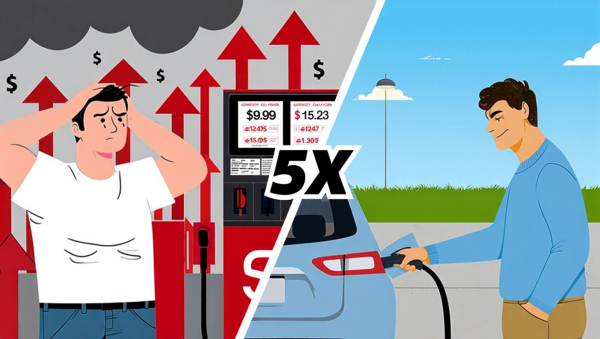
Europe's clean energy group Transport & Environment (T&E) said that if oil prices stay above $100 a barrel, petrol car drivers in Europe could face up to five times the cost burden of EV users. The cost of driving a petrol car 100 km is expected to rise to about 14.2 euros, while an EV would remain at around 6.5 euros. The analysis was based on the surge in energy prices after the Russia-Ukraine war in 2022.
The scale of the impact varies by country depending on power prices and generation methods, but EVs are structurally less exposed to oil price swings. Even if rising crude prices partly affect power generation costs, electricity prices do not jump as sharply as petrol prices. Another advantage is that charging can be based on renewable energy, allowing drivers to avoid the direct impact of spikes in oil and gas prices.
Lucien Mathieu (루시앙 마티외), head of T&E's cars division, said, "EVs are a solution that can fundamentally mitigate such a crisis." He added, "Trump or ayatollahs may be able to control oil prices, but wind and sun cannot be controlled."
EV adoption is already helping reduce Europe's reliance on oil. Europe spent huge sums last year on oil imports for cars, but the analysis said more than 8 million EVs cut oil consumption by about 46 million barrels, generating cost savings of 2.9 billion euros, or about 4.98 trillion won.
Policy remains a variable. The European Union had planned to effectively end sales of internal combustion engine cars by 2035, but the possibility of looser regulation is being raised amid opposition from the auto industry and some countries. Even so, EV adoption is steadily increasing, and recent sales in the European market have maintained double-digit growth. Reuters reported that global EV sales fell 11 percent in February, but rose 21 percent in Europe.
The International Energy Agency (IEA) forecast that if the shift to an energy system centred on EVs and renewable energy accelerates, the economy's overall exposure to long-term fossil fuel price volatility will fall.
The industry sees the cost stability of EVs emerging as an important competitive factor as oil price volatility grows. The analysis said EVs are being reassessed not only for environmental benefits but also as a means of reducing energy risk.
 Jinju Hong
hongjj@d-today.co.kr
Jinju Hong
hongjj@d-today.co.kr